
Last updated November 15, 2026
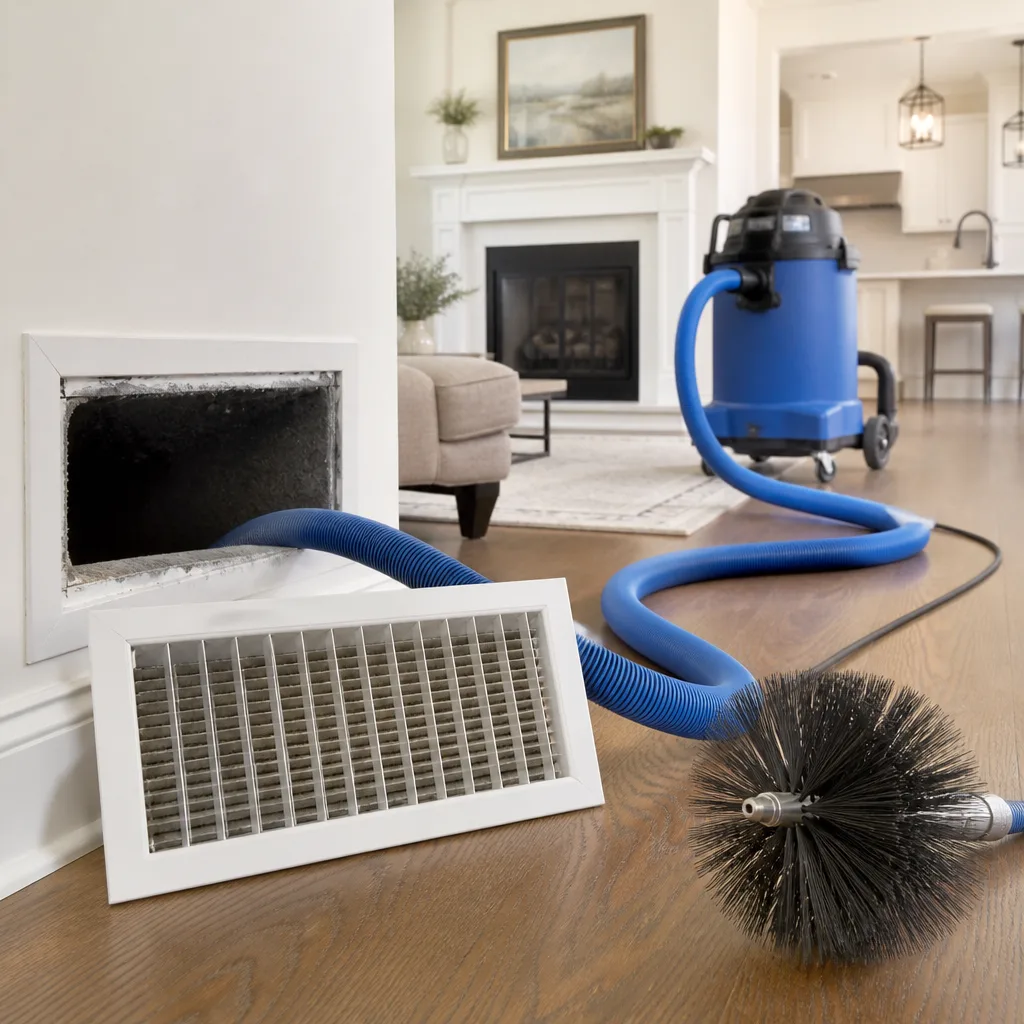 Whole-home duct cleaning
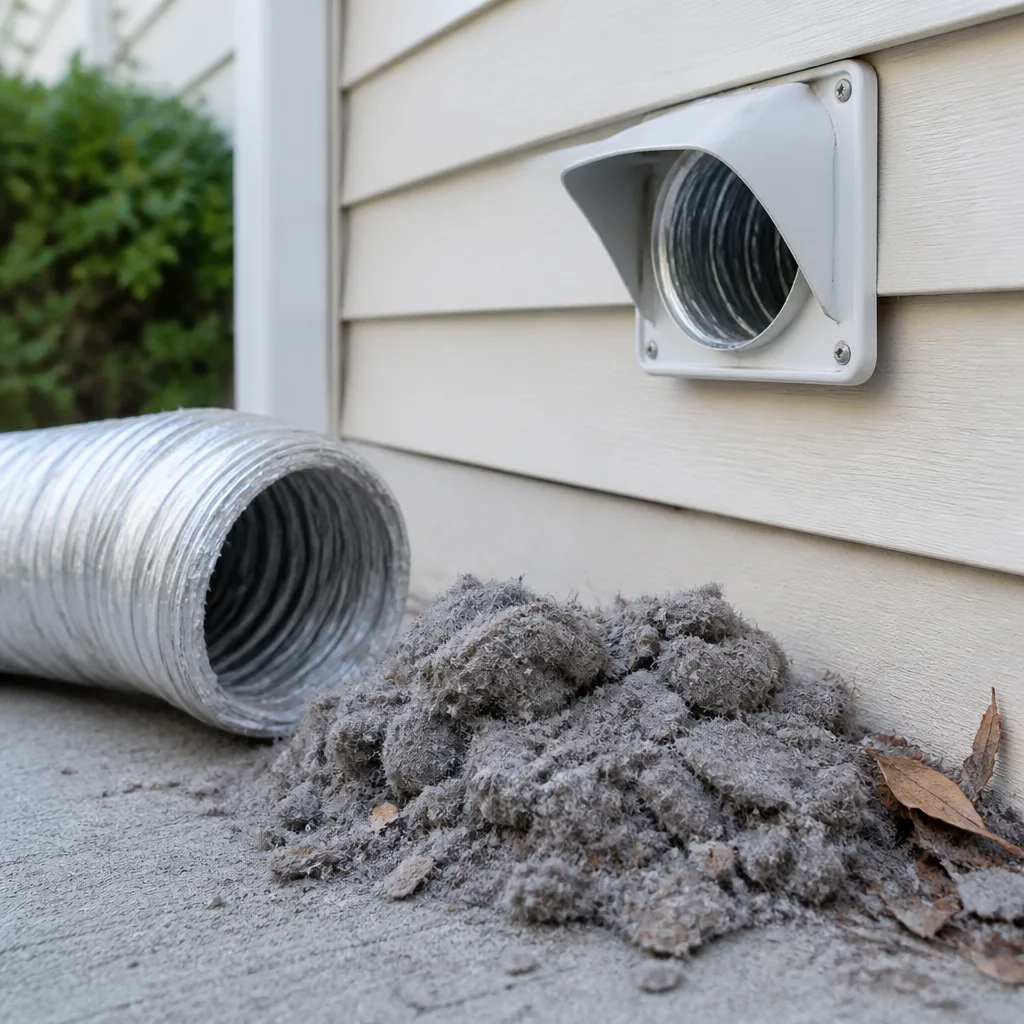 Dryer vent cleaning
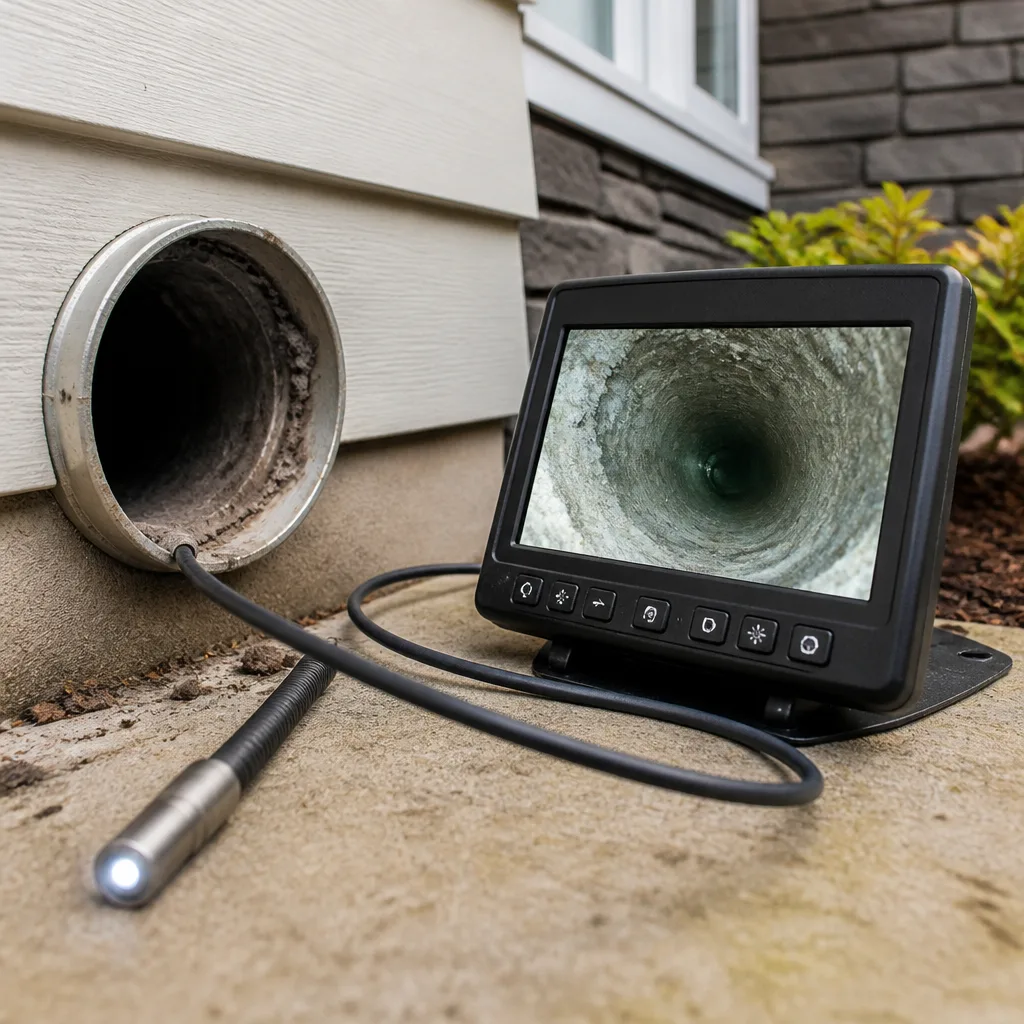 Camera inspection
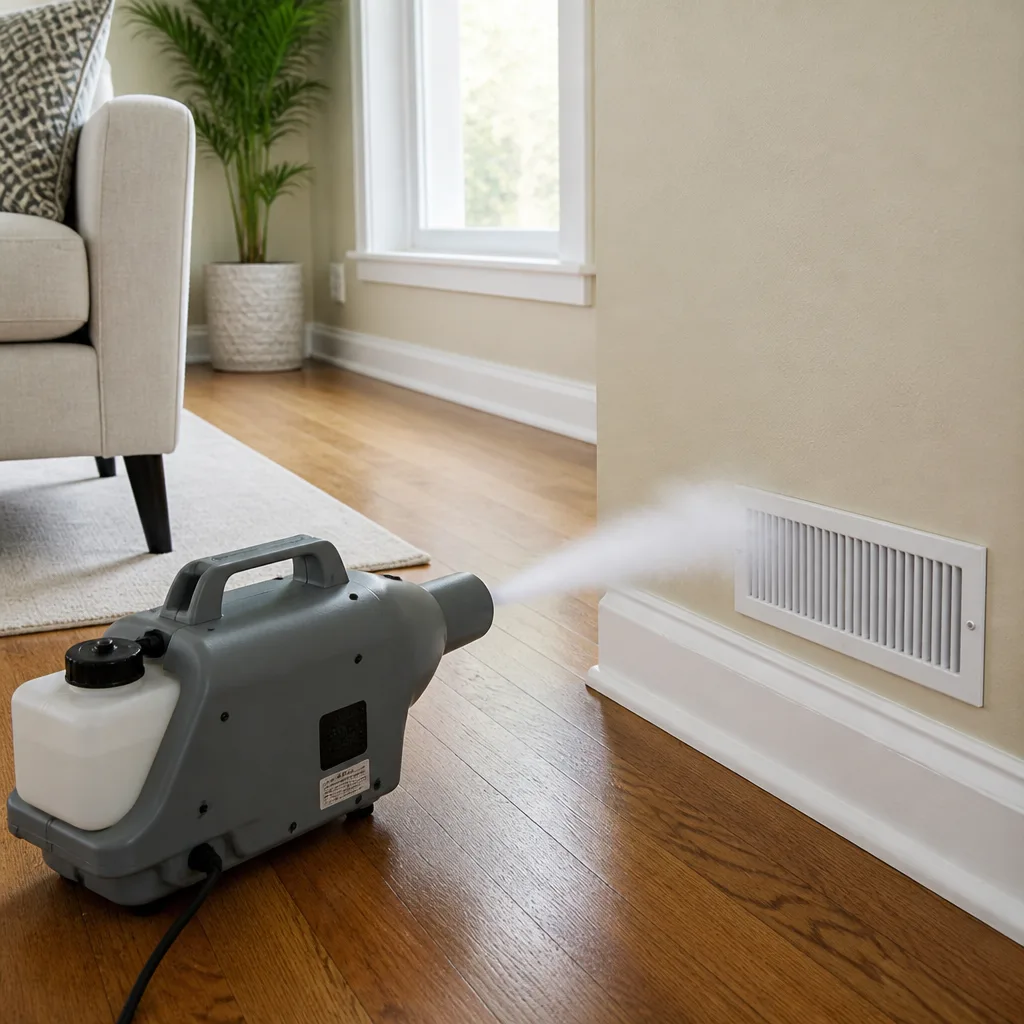 Sanitizing & deodorizing
Whole-system duct and dryer vent check with before-and-after photos - you see exactly what came out of your vents
That "$99 whole-house special" is a bait ad - the real number appears once they are in your hallway, or the "clean" is a shop-vac at the register. We photograph the inside of your ducts before and after instead.
Air Duct Cleaning Warning Signs: A Raleigh Homeowner’s Reference Guide
Dust on a register grille might mean dirty ducts. It might also mean a disconnected duct joint, negative pressure from a leaking return, or an undersized filter bypass. The sign looks the same from your hallway, but the problem behind it is completely different, and the fix is too. That’s why the usual warning-sign lists don’t help much: “you see dust, you have allergies, it’s been a while” describes a feeling, not a diagnosis. Below we lay out warning signs by what they actually point to mechanically, so a symptom leads you to a cause. You’ll learn what to check yourself in a Raleigh home, what needs same-week attention, and what can wait.
Quick Answer
Air duct problems in Raleigh usually show up as one of two things: contamination (debris, dust, biological growth inside the ductwork) or mechanical failure (leaks, separated joints, collapsed flex duct). Contamination develops slowly and can be scheduled. Mechanical failure can starve a room or strain your system and deserves same-week attention. Dust on a vent alone doesn’t tell you which you have; you have to look at the pattern, the airflow, and the duct itself.
Styles & brands we work with
- Whole-home duct cleaning
- Dryer vent cleaning
- Camera inspection
- Sanitizing & deodorizing
Table of Contents
- Why the Symptom Isn’t the Diagnosis
- Warning Signs of Contamination
- Warning Signs of Mechanical Failure
- Startup Smells: Normal or a Problem?
- Airflow Symptoms That Trace Back to Ducts
- What You Can Safely Check Yourself
- Which Signs Need Same-Week Attention
- The Dryer Vent Warning Signs Homeowners Skip
Why the Symptom Isn’t the Diagnosis
A dust streak around a supply register is the most cited warning sign in the trade, and it’s the least informative on its own. Dust collects at a register for at least three very different reasons: the ducts genuinely hold loose debris that the blower pushes out, a joint has come apart so the system is pulling attic or crawlspace air and pushing it into the room, or a return duct is undersized or leaking and the room is running under negative pressure, which draws dust toward every gap. Clean the ducts in the second and third cases and the dust comes back, because the mechanical problem was never the dirt.
This matters in Raleigh because of how much of the local housing stock is built. A large share of homes here sit on crawlspaces or have ductwork running through unconditioned attics. In a Raleigh summer, an attic can hit temperatures that punish flex duct, connectors, and mastic. In winter, the same ductwork cycles cold. That swing is hard on joints and on the tape and sealant holding them. So a Raleigh home is more likely than a basement-ducted home to develop a mechanical duct problem that looks exactly like a cleaning problem.
Our point is simple: a warning sign should send you to a specific question, not straight to a sales call. The rest of this guide is organized that way.
Warning Signs of Contamination
Contamination means material has accumulated inside the ductwork or is growing there. It develops gradually. Nothing about it is an emergency, but left alone it keeps feeding the air your family breathes and it makes the system work harder. Signs that point to contamination rather than a mechanical fault:
- Even, uniform dust film on supply registers throughout the house. If one vent is dusty, suspect that run. If every vent in every room has the same gray film, suspect the whole system.
- Debris visible just inside a supply register when you remove the grille. A light dust coat is normal. Flakes, clumps, or a mat of material sitting on the boot is not.
- A musty or “dirty basement” smell that appears whenever the fan runs. Odor that tracks with the blower is a strong indicator that the source is in the ducts, not the room.
- Visible growth on the inside of a duct or on the evaporator coil access panel. In a humid Raleigh summer, a cooling coil that stays wet between cycles is a common place for growth to start, and the ducts downstream carry it.
- Dust settling on horizontal surfaces faster than it used to even after you’ve cleaned, especially after the system has run a full cycle.
Contamination is what air duct cleaning is built to address: agitation to break compacted debris off the duct walls, then HEPA-rated vacuum capture so it leaves the system instead of recirculating in your rooms. We run Rotobrush brush-agitation systems to dislodge material and Nikro HEPA vacuums to hold it, and we set up Abatement Technologies air-containment equipment so loosened debris doesn’t drift back into the living space while we work. That equipment choice is the whole difference between a real clean and a vacuum waved at a register.
Warning Signs of Mechanical Failure
Mechanical failure means the duct system itself is compromised: a joint separated, a run is crushed, flex duct has torn, or a connection has pulled loose at a boot or plenum. This is the category most cleaning-only providers can’t fix, and it’s the one that most often gets misdiagnosed as “dirty ducts.” Look for:
- One room that never heats or cools like the rest. A single underperforming room usually points to that room’s duct run, not the whole system.
- Dust streaks radiating from a specific register rather than an even film. That pattern suggests air escaping or being pulled in at that fitting.
- Flex duct in the attic or crawlspace that looks flattened, kinked, torn, or disconnected at a collar. A crushed run can’t carry its rated airflow no matter how clean it is.
- Whistling or a rush of air you can hear through a wall or floor where there shouldn’t be one. That’s air moving where it shouldn’t.
- Higher-than-usual energy use with no change in habits. A leaking or disconnected duct in an attic is effectively air conditioning the attic.
Duct repair is a real service, not an upsell. We repair what others only clean: closing gaps, reconnecting runs, and restoring the system so cleaning actually holds. If your sign is mechanical, a cleaning alone will disappoint you, and we’d rather tell you that up front. In our experience around Raleigh, the attic-ducted homes are where these calls cluster.
Startup Smells: Normal or a Problem?
Some smell at startup is normal and some is a warning. Here’s how to tell them apart, because homeowners often can’t, and the difference matters.
Normal startup smells
When the system hasn’t run for a while, the first cycle can carry a faint dusty or “warm” smell as settled dust on the coil and heat exchanger burns off. That smell fades within a cycle or two and doesn’t return while the system is running steadily. In Raleigh, the first cool-morning run in fall and the first hot afternoon in spring are classic times for this.
Smells that signal a problem
- Musty, damp, or “wet cardboard” that returns every time the fan runs, not just the first cycle. Points to moisture and possible growth in the ducts or on the coil.
- A smell that’s stronger at certain registers than others. Points to that specific run.
- An oily or burning smell that persists or intensifies. Dust burning off a heat exchanger smells different from a hot electrical smell, and the second one is a safety concern, not a duct concern. Shut the system down and have it looked at.
- A smell that only appears when the fan runs, not when the AC or heat is on. That isolates the source to the blower and ducts.
If a smell is persistent and tracks with the blower, we can inspect the runs and tell you whether it’s contamination, moisture, or a mechanical cause. Before and after airflow tells the story better than any verbal claim.
Airflow Symptoms That Trace Back to Ducts
When a room won’t heat or cool, homeowners often assume the system is undersized or the unit is failing. Sometimes that’s true. But more often than the AC companies like to admit, the equipment is fine and the ductwork is the bottleneck. Here’s how to know which you’re looking at:
- Measure the gap between rooms. If most rooms are comfortable and one or two are consistently off by more than a few degrees, that points to those specific duct runs.
- Feel the airflow at each register. A weak supply that feels stronger when you close other vents in the house suggests a distribution problem, not a capacity problem.
- Check whether the problem room is at the end of the duct run. Long, flex-heavy runs to far rooms lose airflow along the way, especially if a section is crushed or disconnected.
- Confirm the filter isn’t the culprit. A clogged or wrong-sized filter can starve the whole system. Change it and give it a cycle before assuming the ducts are at fault.
- Look for a return-air problem. A room with a supply but a blocked or undersized return can run at negative pressure and never get comfortable, no matter how clean the supply ducts are.
If the pattern matches steps one through three, a duct inspection is the next step, not a new air conditioner. We can trace airflow and check the runs before anyone recommends equipment.
What You Can Safely Check Yourself
Plenty of the inspection is safe for a homeowner with a flashlight, and it saves you a call when the answer is obvious. Stick to these visual checks and leave the inside of the system to a professional.
- Register color patterns. Pull a supply grille and look at the boot. An even light dust coat is normal. A dark ring, streaking, or flakes means that run is passing debris.
- Flex duct condition in the attic or crawlspace. With the system off, walk the runs and look for crushed, kinked, torn, or disconnected sections. Don’t touch them. Just note what you see.
- The filter. Wrong size, clogged, or missing entirely. An oversized filter that bypasses at the edges lets dust straight into the equipment.
- The return grille. A dusty return is a strong hint the whole system is pulling in debris.
- Condensate and coil access panel for standing water or visible growth. Note it, don’t open it.
Don’t climb into a hot attic in a Raleigh afternoon, don’t pull apart duct connections yourself, and don’t reach into the air handler. If a run is torn or disconnected, that’s a professional repair. Note it and call.
Which Signs Need Same-Week Attention
Not every warning sign is urgent, and treating them all as emergencies is exactly the pressure tactic homeowners are right to distrust. Here’s a plain way to sort them.
Same-week attention
- A room that’s starved of airflow with a confirmed crushed, torn, or disconnected duct.
- A persistent musty smell with visible moisture or growth at the coil or ducts.
- A burning or hot electrical smell that persists when the system runs.
- Any sign of a dryer vent that’s clogged or restricted (see below), because that’s a fire-safety matter.
Schedule when convenient
- Uniform dust film on registers and horizontal surfaces with no airflow complaint.
- A dusty return and a filter that’s doing its job.
- A slow-building smell that isn’t tied to moisture.
- Ducts that clearly haven’t been cleaned in a long time but airflow is still balanced.
The rule of thumb: if the sign involves restricted airflow to a room, moisture, or heat, treat it as same-week. If it’s about accumulation with the system still balanced, it can wait for the next scheduled visit. We’d rather help you sort that honestly than sell you an emergency.
The Dryer Vent Warning Signs Homeowners Skip
Dryer vent cleaning is a fire-safety service, not an accessory to the duct cleaning, and the warning signs are different from duct signs. The leading appliance-related cause of residential fires is the clothes dryer, and lint accumulation in the vent is the reason. In a Raleigh home where the dryer sits against an exterior wall, the vent run can be short, but lint still packs the transition and the outside hood. Signs to watch:
- Clothes take longer than one cycle to dry, or you need a second cycle.
- The dryer feels hot to the touch on top or the door is hot when the cycle ends.
- A burning or scorched smell during the cycle.
- Lint visible around the outside vent hood, or a hood flap that doesn’t open cleanly.
- The transition duct behind the dryer is crushed or has come loose.
Any of these calls for dryer vent cleaning before the next load. This is the one warning sign in this guide where “wait and see” is the wrong answer. If you see any of these, call us and treat it as same-week.
Common Mistakes to Avoid
- Assuming dust means cleaning. It might mean a disconnected joint or a leaking return. Skipping the inspection and going straight to cleaning wastes money and leaves the real problem in place.
- Judge a provider by the coupon. A very low up-front price often becomes a much larger invoice once the technician is on site. Ask for one flat price per system, agreed before work starts.
- Hiring a vacuum-only crew that can’t repair. If the sign is mechanical, a cleaning-only provider has nothing to offer except a promise to come back. Look for a provider that does repair too.
- Ignoring the dryer vent while you handle the ducts. It’s a separate fire-safety service and most homeowners skip it. Don’t be one of them.
- Climbing the attic to “check it yourself” in the heat of a Raleigh afternoon. Visual checks in the attic or crawlspace should be done carefully with the system off, and never so far in that you can’t get out safely.
- Pulling duct connections to “see what’s inside.” A separated connection you create is a mechanical failure you now own. Let a trained professional inspect it.
- Treating all warning signs as urgent. Moisture, restricted airflow, and heat are same-week. Accumulation can be scheduled. Being honest about which is which is how you avoid getting pushed.
See the difference
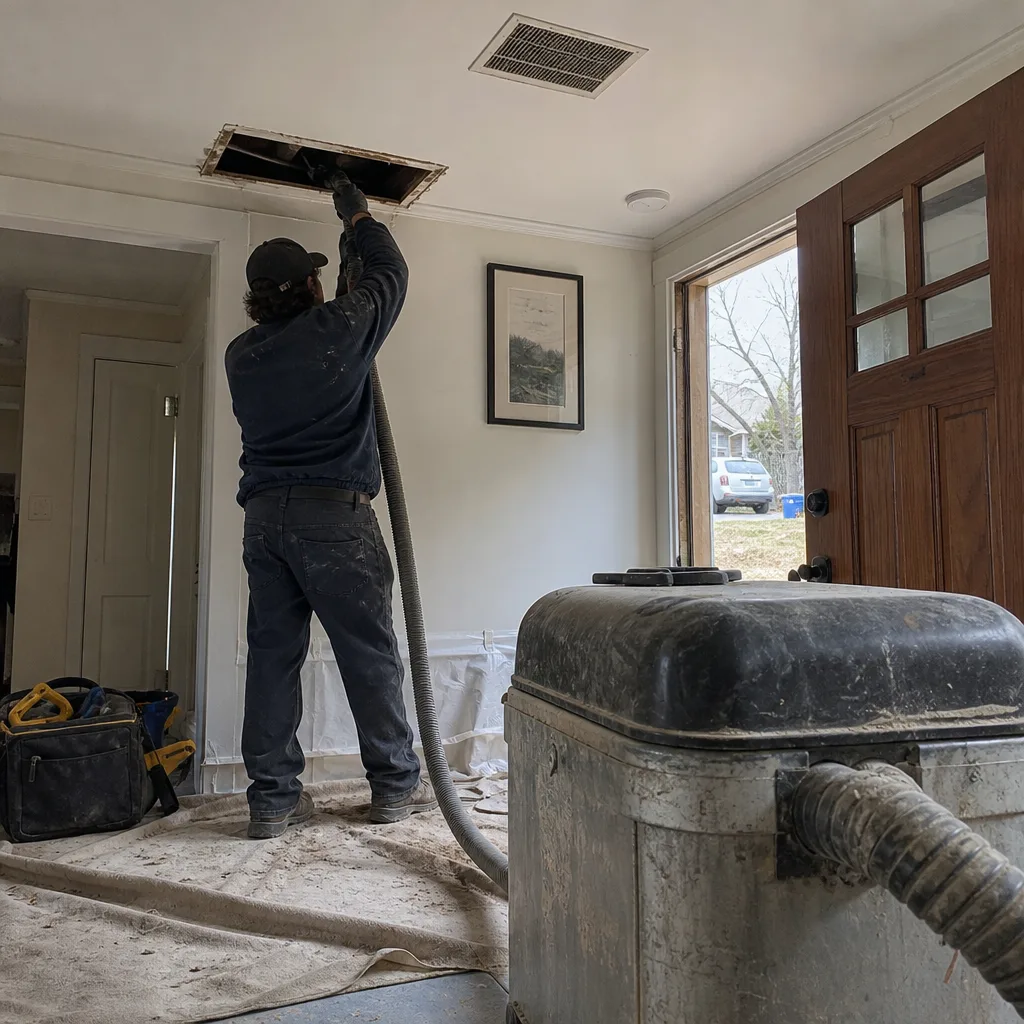 Before
 After
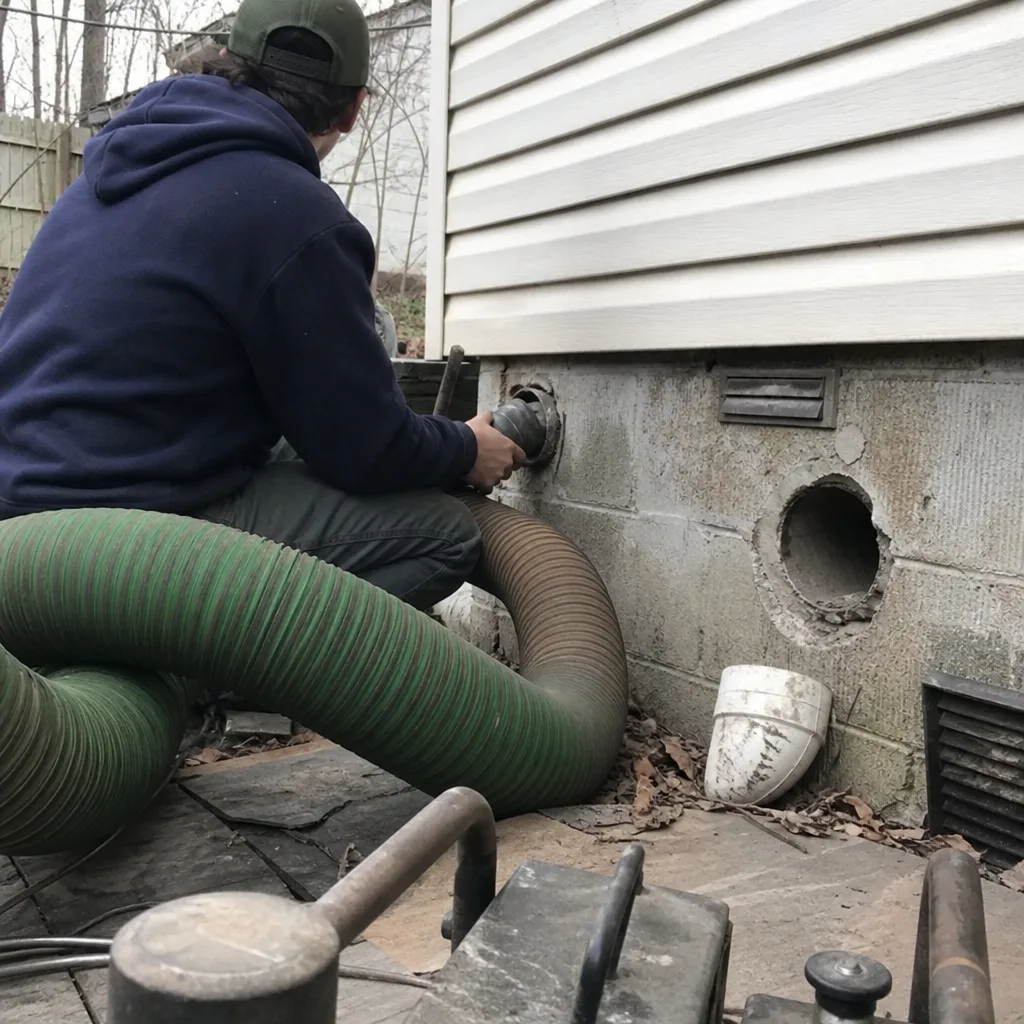 Before
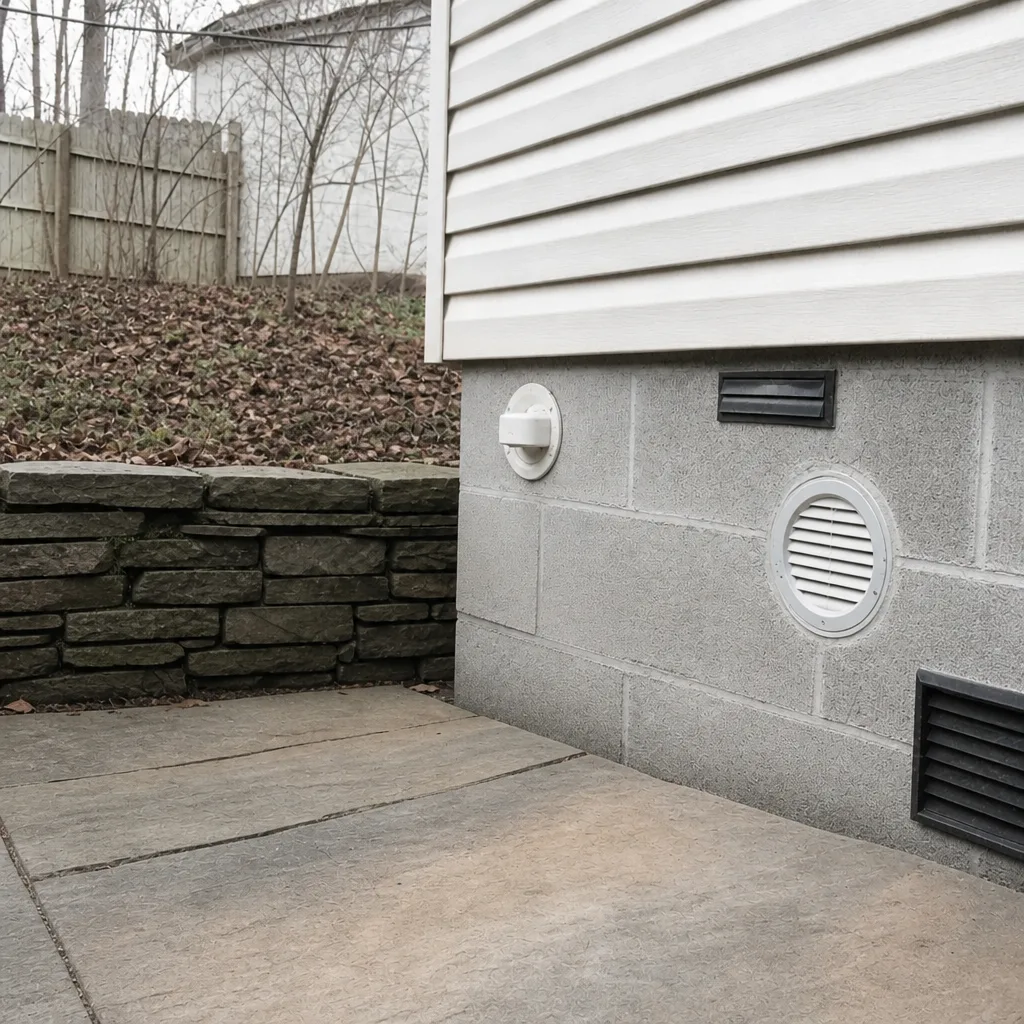 After
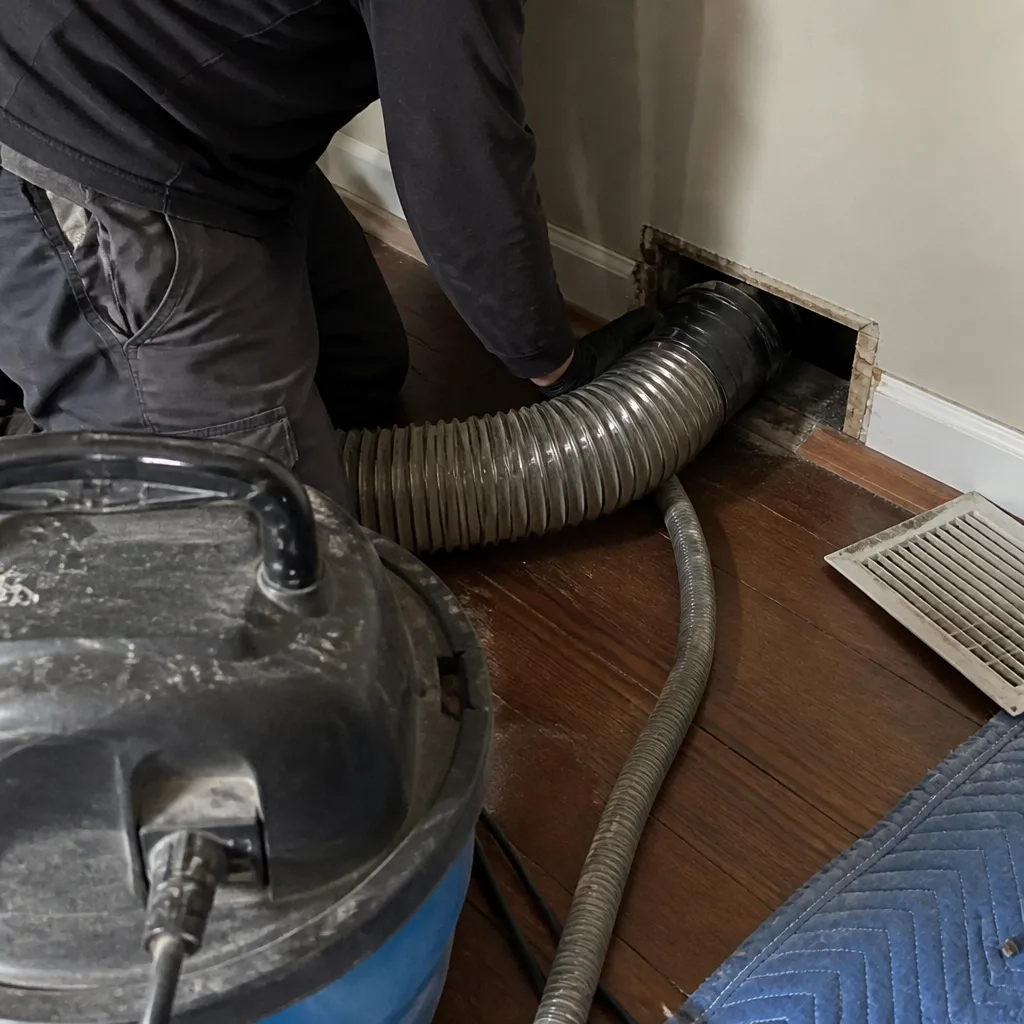 Before
 After
When to Call a Professional
Call when a warning sign points to something you can’t safely resolve on your own. Tenants in a rental and recent homebuyers often don’t know the duct history, and an inspection answers the question quickly. If a room is starved of airflow, if there’s a musty smell tied to the blower, if you see torn or disconnected flex in the attic, or if your dryer vent shows any restriction, don’t wait. Call us and we’ll give you a straight answer about whether it’s contamination, mechanical, or both.
Jasper Duct Cleaning offers free estimates in Raleigh. Call (844) 834-2817. We answer 24/7. Fast dispatch from 7am to 7pm, Sunday through Friday, closed Saturday. Our technicians have up to 10 years of experience, and one flat price per system is agreed before work starts, with before-and-after photos of your own ducts.
Frequently Asked Questions
Whole-system air duct cleaning in Raleigh typically runs in a mid-three-figure to low-four-figure range depending on the number of runs, system size, and whether repair is needed, and a written estimate sets the final price. We give one flat price per system, not a per-vent price, so you know the number before work starts.
Call (844) 834-2817 for an exact quote. Estimates are free.
Because they’re often a teaser price for a partial pass, not a whole-system clean with containment and HEPA capture. Ask what equipment they use and whether they can repair a disconnected duct. If the answer is “vacuum only” with no ability to fix the joint, you’re paying for a visit that won’t solve a mechanical problem. We answer both parts, and the flat price is agreed before we start.
Ask for before-and-after photos of the inside of your own ducts and a walkthrough of the equipment used. A provider confident in the work will show it. We photograph your ducts before and after, and we run the actual Rotobrush and Nikro equipment so the result is visible, not claimed.
There’s no fixed schedule that fits every Raleigh home. Homes with allergies, pets, recent renovations, or ductwork in a humid attic tend to need it sooner than others. Clean when the warning signs appear, not on a timer. If you’re not sure, an inspection tells you.
Only if it’s musty, burning, or persistent rather than a faint dust smell that fades after a cycle. Musty means moisture and possible growth. Burning means heat, and dust on a heat exchanger smells different from hot electrical, which is a safety concern. Shut the system down and call if it’s the second.
It’s separate and it’s a fire-safety service. Lint restriction is the leading appliance-related cause of residential fires, so the dryer vent warning signs deserve same-week attention regardless of what your supply ducts look like. Call (844) 834-2817 if you’re seeing any of the restriction signs above.
The Bottom Line
A warning sign is only useful if it points to a cause. Dust film throughout a Raleigh home usually means contamination. Dust around one register, a starved room, or a crushed run in the attic usually means mechanical failure. Musty smells tied to the blower mean moisture and possible growth. Burning smells mean heat, which is a safety call. Dryer vent restriction is always same-week. Sort your signs into contamination, mechanical, moisture, heat, and dryer vent, and the right next step becomes obvious. If you’d rather have a straight answer from someone who inspects, cleans, and repairs under one roof, call Jasper Duct Cleaning at (844) 834-2817 for a free estimate.
Written by the team at Jasper Duct Cleaning.