
Last updated November 15, 2026
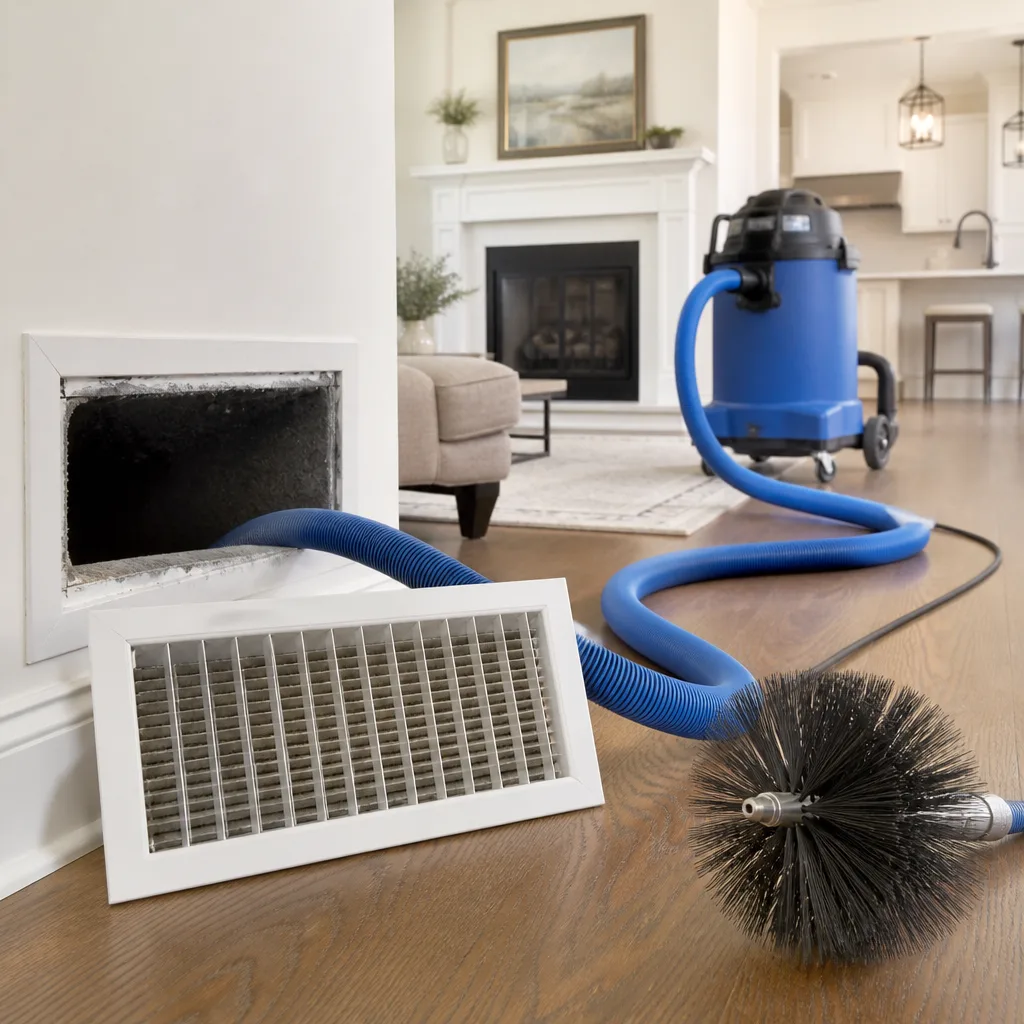 Whole-home duct cleaning
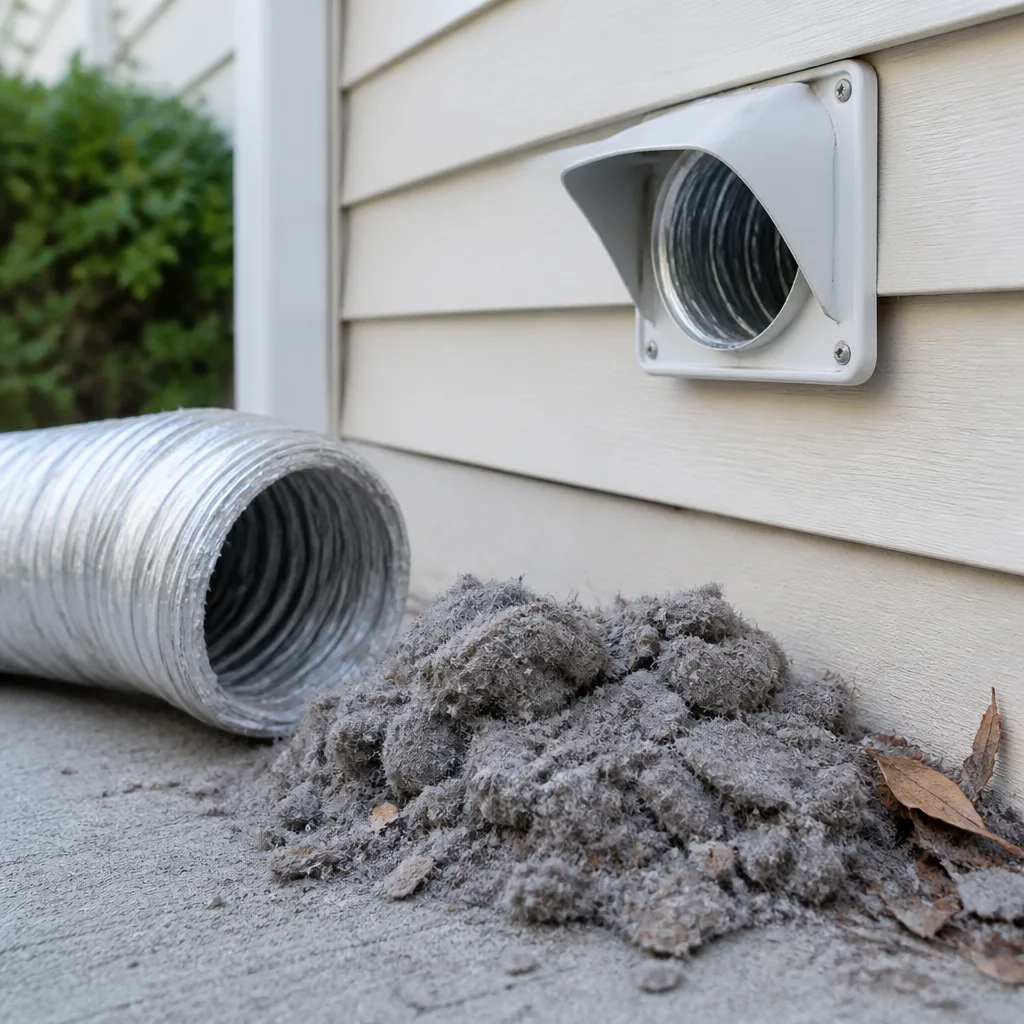 Dryer vent cleaning
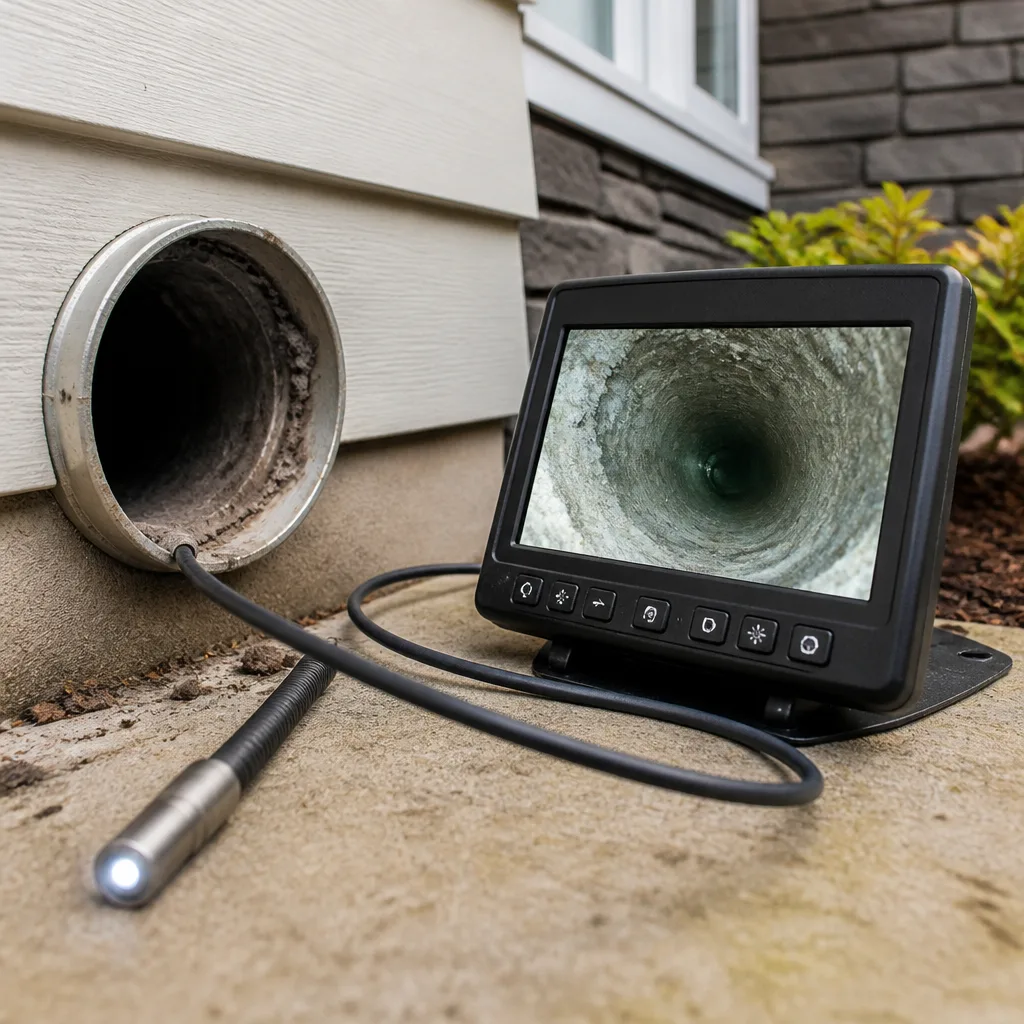 Camera inspection
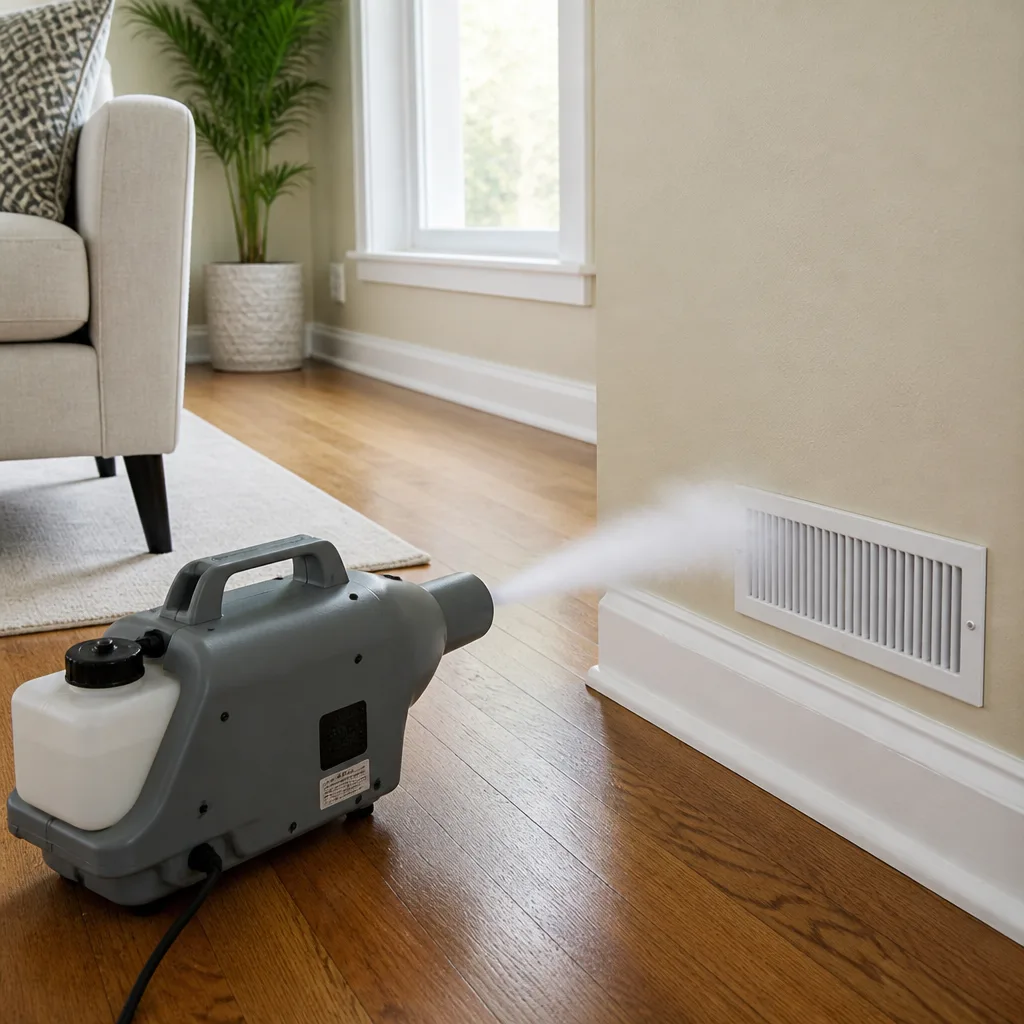 Sanitizing & deodorizing
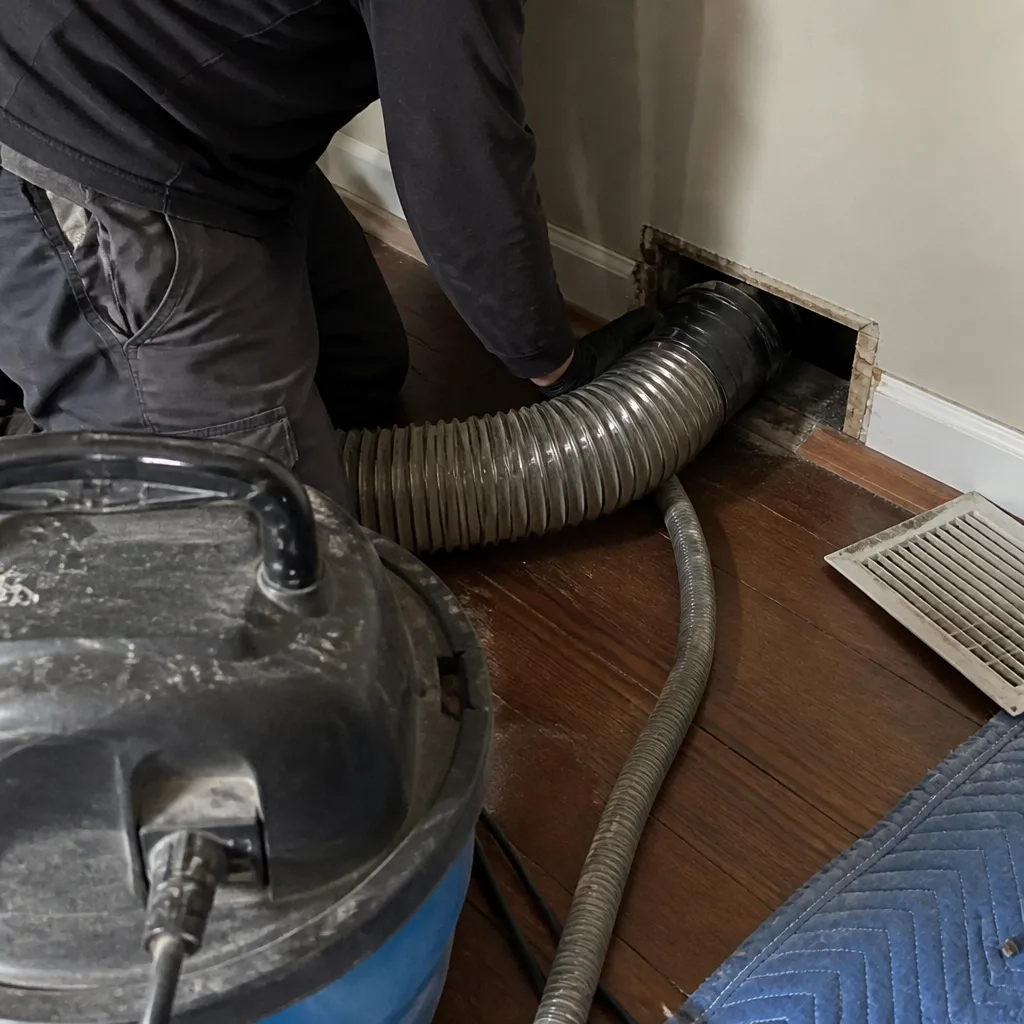
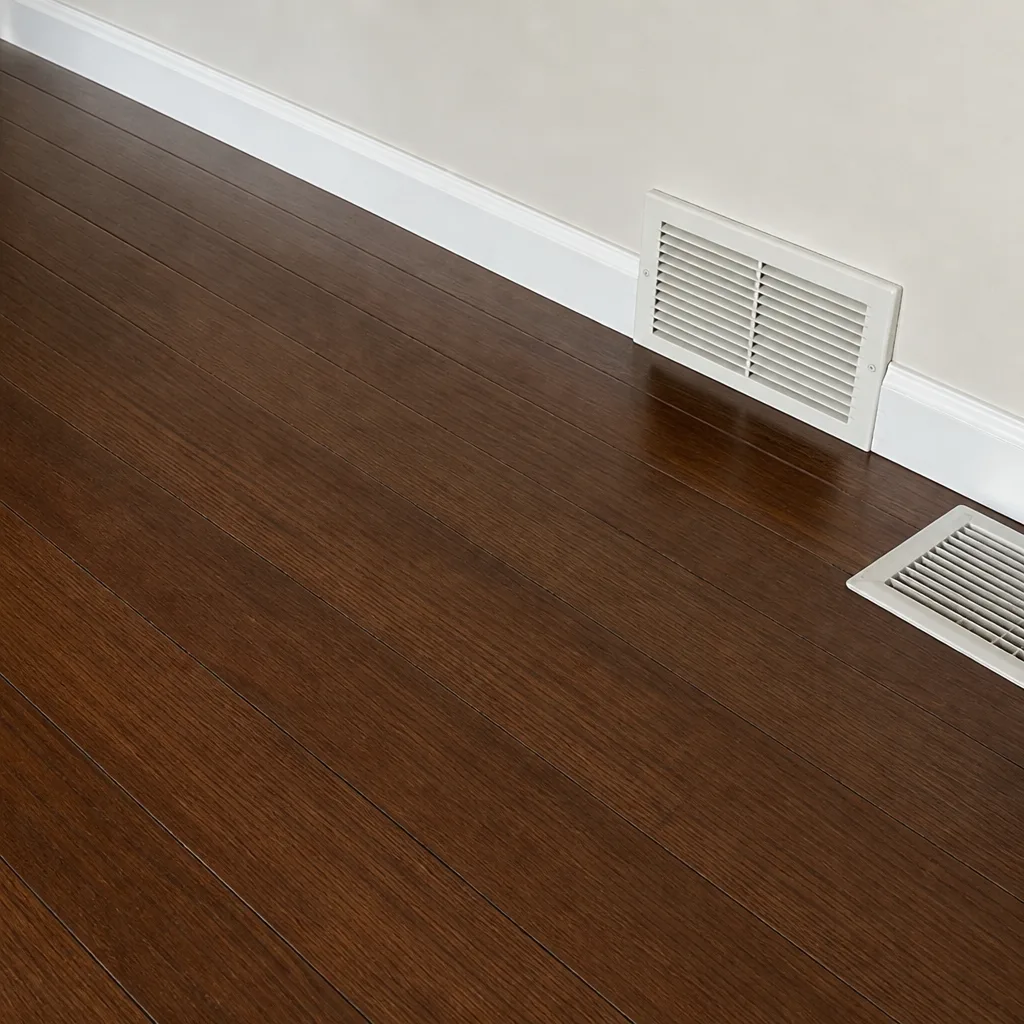
Whole-system duct and dryer vent check with before-and-after photos - you see exactly what came out of your vents
That "$99 whole-house special" is a bait ad - the real number appears once they are in your hallway, or the "clean" is a shop-vac at the register. We photograph the inside of your ducts before and after instead.
How to Hire an Air Duct Cleaning Contractor in Raleigh: A Step-by-Step Guide
North Carolina does not require a specific duct cleaning license, which means the contractor showing up at your door may have passed zero technical evaluations. Ever. That’s the uncomfortable truth behind this whole category of home service, and it’s why “who has the cheapest coupon” is the wrong question to ask. The right question is whether the person holding the vacuum can tell you what equipment they’re using, what it does, and what they’ll document before and after. This guide gives you a vetting process built around specific questions, specific red flags, and specific verification steps, so you can filter out a truck with a hose before it touches your system in Raleigh.
Quick Answer
To hire an air duct cleaning contractor in Raleigh, verify the company can name its equipment, confirm whether it holds NADCA membership, demand a written scope of work with line items and access points, and ask directly whether they do duct repair. A legitimate contractor answers all four without hesitation. An evasive answer on any one of them is your signal to move on.
Styles & brands we work with
- Whole-home duct cleaning
- Dryer vent cleaning
- Camera inspection
- Sanitizing & deodorizing
Table of Contents
- Why There’s No License to Check in North Carolina
- The Equipment Questions That Separate Pros From Pretenders
- How to Verify NADCA Membership (And What It Actually Means)
- What a Written Scope of Work Should Include
- Red Flags Specific to the Raleigh Market
- Why Repair Capability Is the Question Most Homeowners Never Ask
- A Step-by-Step Vetting Process Before You Book
- What to Expect on the Day of the Job
Why There’s No License to Check in North Carolina
Most trades you hire around the house come with a state license you can look up in a database. HVAC contractors in North Carolina are licensed. Electricians are licensed. Plumbers are licensed. Duct cleaning, as a standalone service, is not. A company can register a business name, print cards, and start taking calls with no technical evaluation of any kind.
That gap is the reason this guide exists. When you hire a licensed trade, the state has already done a first pass on competence. With duct cleaning, the first pass is on you. The good news is that the industry has a voluntary credential that functions as a real filter: NADCA membership, which we’ll cover in detail below.
Here in Raleigh, the practical effect is a market with a very wide quality spread. A legitimate operator working with professional equipment is competing for the same search results as someone running a shop vac and a fogger out of a van. Price alone won’t tell you which is which. Neither will a polished website. What separates them is whether they can answer technical questions about their own process.
One more local wrinkle: Raleigh’s housing stock runs from older homes near downtown and in neighborhoods like Five Points and Boylan Heights to newer construction out toward Brier Creek and Wake Forest. Older homes tend to have duct systems that have been modified, extended, or patched over the years, which means cleaning without an inspection can stir up problems the homeowner didn’t know existed. That’s why the equipment and the inspection questions matter together, not separately.
The Equipment Questions That Separate Pros From Pretenders
Ask any contractor what equipment they use and listen carefully. A real answer involves brand names, equipment categories, and a reason each tool exists in the process. An evasive answer involves the word “professional” repeated with no specifics attached.
Here’s what acceptable answers sound like:
- Source-capture vacuum with HEPA filtration. The vacuum should be rated to capture fine particulate at the source, not just pull bulk debris. Nikro HEPA-rated vacuum systems are one example of the class of equipment you’re looking for.
- Agitation equipment for the duct walls. Vacuum alone leaves compacted debris stuck to the inside of the duct. A rotary brush system, like the Rotobrush line, physically dislodges it so the vacuum can carry it away. If a contractor can’t name an agitation method, they’re not cleaning the walls, they’re cleaning the air moving past them.
- Containment or negative-air equipment. This is the piece most homeowners never think to ask about. When debris is loosened inside a duct system, it can recirculate through the house if there’s no containment discipline. Abatement Technologies air-quality machines are used in professional remediation work for exactly this reason. A contractor who can explain negative-air containment has thought about where the debris goes.
Evasive answers sound like this: “We use a truck-mounted system” with no further detail, “the best equipment available,” or a pivot to pricing. Truck-mount claims are vague by design. A truck-mounted vacuum can be excellent or inadequate depending on the unit, and a contractor who won’t describe the filtration or the agitation method is hiding something, whether they mean to or not.
We use Rotobrush agitation, Nikro HEPA-rated vacuums, and Abatement Technologies containment on our air duct cleaning jobs, and we’re happy to explain what each one does. Any contractor worth hiring should be too.
How to Verify NADCA Membership (And What It Actually Means)
NADCA is the National Air Duct Cleaners Association, and it’s the closest thing this industry has to a professional standard. Membership isn’t a license and it doesn’t replace one, but it does obligate a company to something. At minimum, it signals that the company has agreed to a code of ethics and, for the higher membership tiers, has demonstrated something about its technical capability.
Here’s how to check it in three steps:
- Go to the NADCA website directly. Don’t rely on a badge image on the contractor’s own site; anyone can upload an image.
- Search the company name in the member directory. Confirm the listing is current, not an old logo from years past.
- Ask the company which membership tier it holds. The tiers differ in what’s required to get in and stay in, and a company that can’t tell you which one it has probably isn’t active.
What NADCA membership does not do: it does not license the contractor, it does not guarantee the quality of a particular job, and it does not make the company insured. Those are separate checks, and you should still do them. Ask for a certificate of insurance from the contractor’s insurer, not just a verbal yes.
In the Raleigh market, NADCA membership is a useful first filter because it eliminates the operators who never bothered with any industry credential at all. It isn’t the whole vetting process, but it shortens the list considerably.
What a Written Scope of Work Should Include
Before you agree to anything, you should have a written document that describes exactly what will happen in your house. Verbal scopes are how bait-and-switch pricing works. If it isn’t written down, it isn’t the scope.
A proper written scope includes these elements:
- Line items for every component. Supply ducts, return ducts, the air handler, registers, and any accessible plenum. If the quote is “duct cleaning” with no breakdown, ask for one.
- Number of access points. Ducts are cleaned through cut access holes, which are then sealed. The scope should state how many will be made and where.
- Cleaning method by section. Which parts get brush agitation, which get vacuum only, and why.
- Before-and-after documentation. Photos of the duct interior before and after cleaning. This is your proof the work actually happened.
- Whether repair is included or excluded. If the inspection finds disconnected joints or damaged flex duct, is that a separate conversation, or is it built in? Get the answer in writing.
- The final price and what changes it. You want a flat price per system agreed before work starts, with a clear statement of what could trigger a change and how you’d be consulted.
If a contractor resists putting any of that in writing, that’s your answer. The written estimate sets the final price, and the scope is what the estimate is based on.
Red Flags Specific to the Raleigh Market
Certain sales patterns show up over and over in this market, and they’re worth recognizing before you’re on the phone with someone.
Bait-and-switch pricing. A very low advertised price for “whole house duct cleaning” that becomes a much larger invoice once the technician is on site. The low number is a door-opener. The real price is whatever gets added after the truck arrives.
Antimicrobial upsell pressure. After the cleaning starts, the technician “discovers” mold and pressures you into a treatment on the spot. Antimicrobial products aren’t a standard part of every job, and legitimate assessment of a real problem isn’t done mid-visit under sales pressure. If it’s a genuine concern, it gets inspected and quoted separately.
Vague truck-mount claims. As covered above, “we use a truck-mounted system” with no detail is a non-answer. Ask what the filtration is rated for and how debris is contained during the job.
No documentation offered. A contractor who doesn’t mention before-and-after photos hasn’t planned to provide any. Ask up front.
Pricing by the vent. Per-vent pricing rewards the contractor for counting vents, not for cleaning the system. A whole-system price is the honest structure.
No repair capability. This one takes a specific question to surface, which is the next section.
Why Repair Capability Is the Question Most Homeowners Never Ask
Here’s the question that separates a real duct specialist from a cleaning-only crew: “What do you do if you find damage?”
Most duct cleaning companies clean. That’s the whole service. If they find a disconnected joint, a crushed section of flex duct, or gaps at the plenum during the job, they can’t fix it. They finish cleaning, tell you about the problem, and either hand you off to someone else or leave you to find a repair contractor on your own. The cleaning happens, the air still leaks, and nobody’s accountable for the outcome.
That’s the differentiator that almost never makes it into the vetting conversation, and it should. A gap between duct sections is where a meaningful portion of your conditioned air escapes into the attic or crawlspace instead of reaching the rooms. Cleaning a system with leaks doesn’t solve the airflow problem, it just confirms it exists.
We repair what others only clean. Jasper Duct Cleaning handles air duct cleaning, dryer vent cleaning, and air duct repair under one provider, and our repair work isn’t subcontracted out. When our technicians find a problem during a cleaning, they can address it in the same visit rather than handing you a note.
Ask any contractor: “If you find a disconnected or damaged duct during the job, what happens next?” A cleaning-only company will tell you they’ll refer you. A full-scope specialist will tell you how they fix it. That answer tells you a lot about how the job will actually end.
A Step-by-Step Vetting Process Before You Book
Here’s the sequence that works, in order, before you commit to anyone. Each step eliminates a category of risk, so don’t skip ahead.
- Check NADCA first. Search the company on the NADCA site. If they aren’t listed, ask why, and weigh the answer. A company that isn’t a member can still be competent, but the burden of proof just got higher.
- Verify insurance. Request a certificate of insurance. Call the insurer’s number on it and confirm the policy is active. A legitimate company will expect this question and have the paperwork ready.
- Ask the equipment questions. What vacuum, what filtration rating, what agitation method, what containment. Specific answers build confidence; vague ones don’t.
- Ask the repair question. “What do you do if you find damage during the job?” This is the fastest way to find out whether you’re hiring a cleaner or a duct specialist.
- Request a written scope. Line items, access points, cleaning method by section, before-and-after photo commitment, and a flat price per system. Review it before you agree to anything.
- Confirm the price structure in writing. The written estimate sets the final price. If a per-vent price or a coupon-style teaser appears, that’s a signal to renegotiate or walk.
- Ask what happens after the job. Do you get photos? A summary of what was found? A note on any damage you should watch? The post-job communication tells you how seriously they take their own work.
This entire process takes maybe 20 minutes on the phone and online. It’s the difference between a job that improves your airflow and a job you’ll wonder about afterward.
What to Expect on the Day of the Job
Once you’ve hired the right contractor, the day of the job should be straightforward. Here’s what should happen, so you can compare reality against expectation.
The crew arrives and does a walkthrough before any equipment is set up. You and the crew confirm access points and the scope of work. If anything has changed since the quote, it should be discussed before work starts, not after.
Containment and equipment go in next. Negative-air containment matters here: the point is to keep loosened debris from spreading through the house during the cleaning. If the crew is opening up the system and the airborne dust in your living room goes up, that’s not a good sign.
Then the actual cleaning happens, section by section, with the agitation brush and the HEPA vacuum working together. The cleaning takes time; a job that’s finished in 45 minutes on a full system is a job that skimmed the surface.
At the end, you should get before-and-after photos of the duct interiors. That documentation is the whole accountability piece. Ask for it if it isn’t offered.
If you’re in Raleigh and comparing options, you can call us at (844) 834-2817 for a free estimate. We answer 24/7. Fast dispatch from 7am to 7pm, Sunday through Friday.
Common Mistakes to Avoid
- Choosing on price alone. A very low quoted price in the Raleigh market usually signals a per-vent structure or a bait-and-switch, not a good deal. The final invoice tells the real story.
- Skipping the NADCA check. Badge images on a website prove nothing. Search the member directory directly and confirm the listing is current.
- Not asking about equipment specifics. If a contractor can’t name the vacuum, the agitation system, and the containment approach, they’re not equipped to do the job well in Raleigh homes with older, modified duct work.
- Accepting a verbal scope. Everything should be in writing: line items, access points, method, and price. A verbal quote is not an agreement you can hold anyone to.
- Forgetting the repair question. This is the mistake that costs homeowners twice, once for the cleaning and once for a repair contractor they had to track down themselves.
- Falling for the antimicrobial upsell. Mid-job “mold discovery” pressure is a sales tactic. Real concerns get inspected and quoted separately.
- Not asking for documentation. Before-and-after photos are the proof of work. A contractor who doesn’t provide them hasn’t given you anything to verify.
See the difference
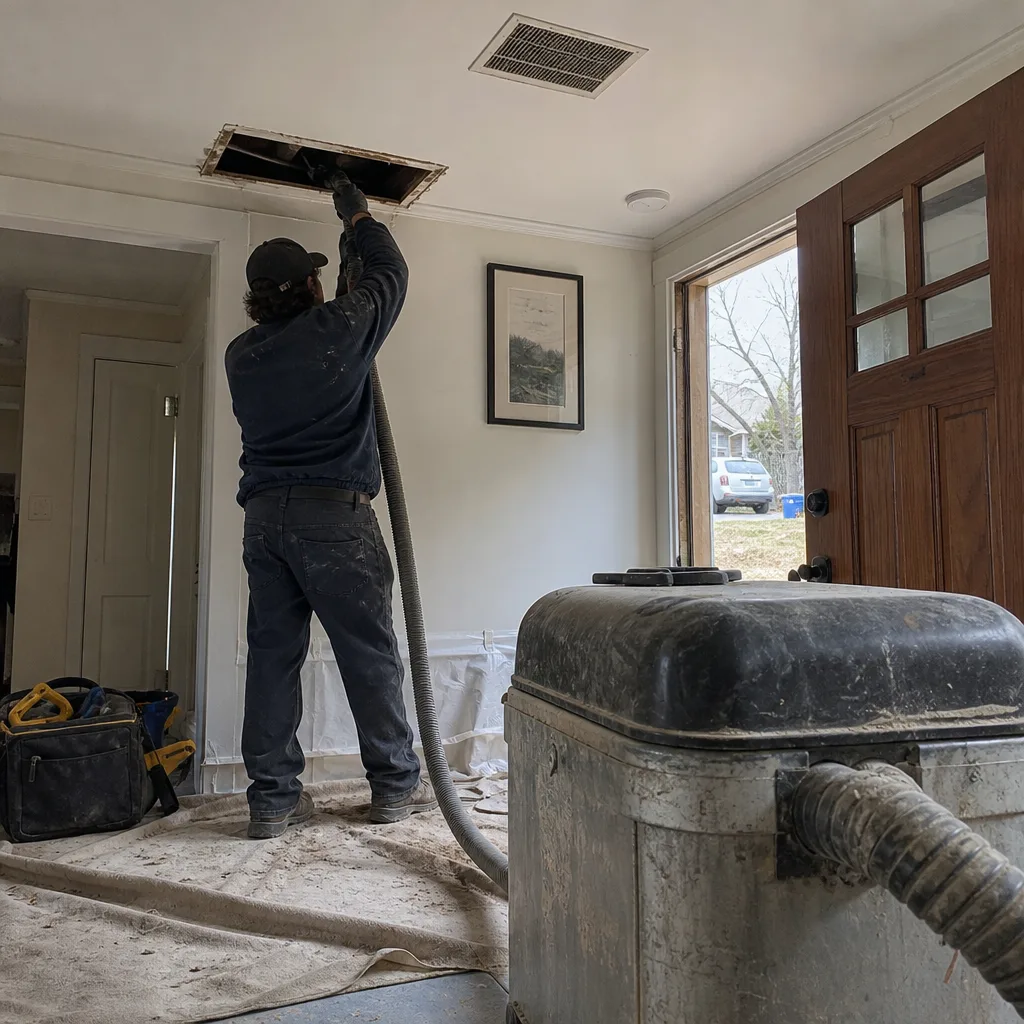 Before
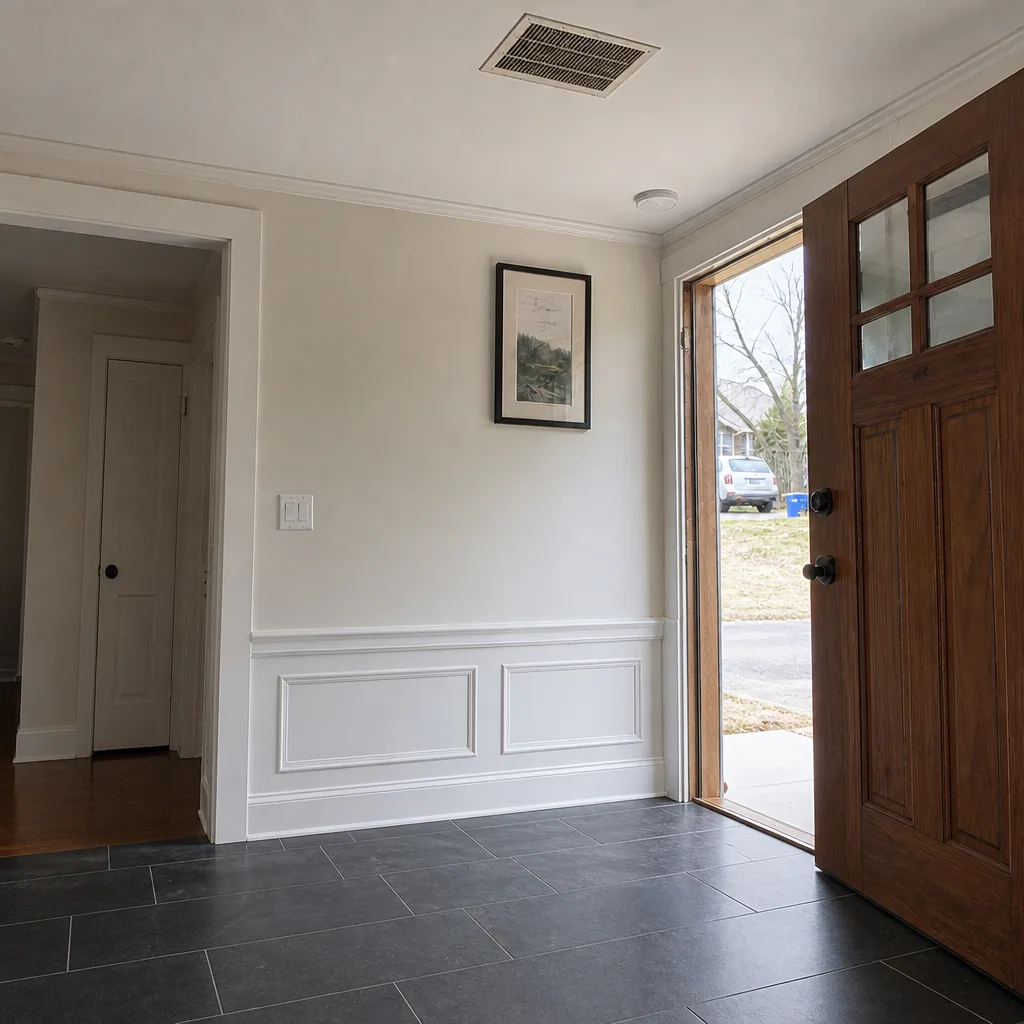 After
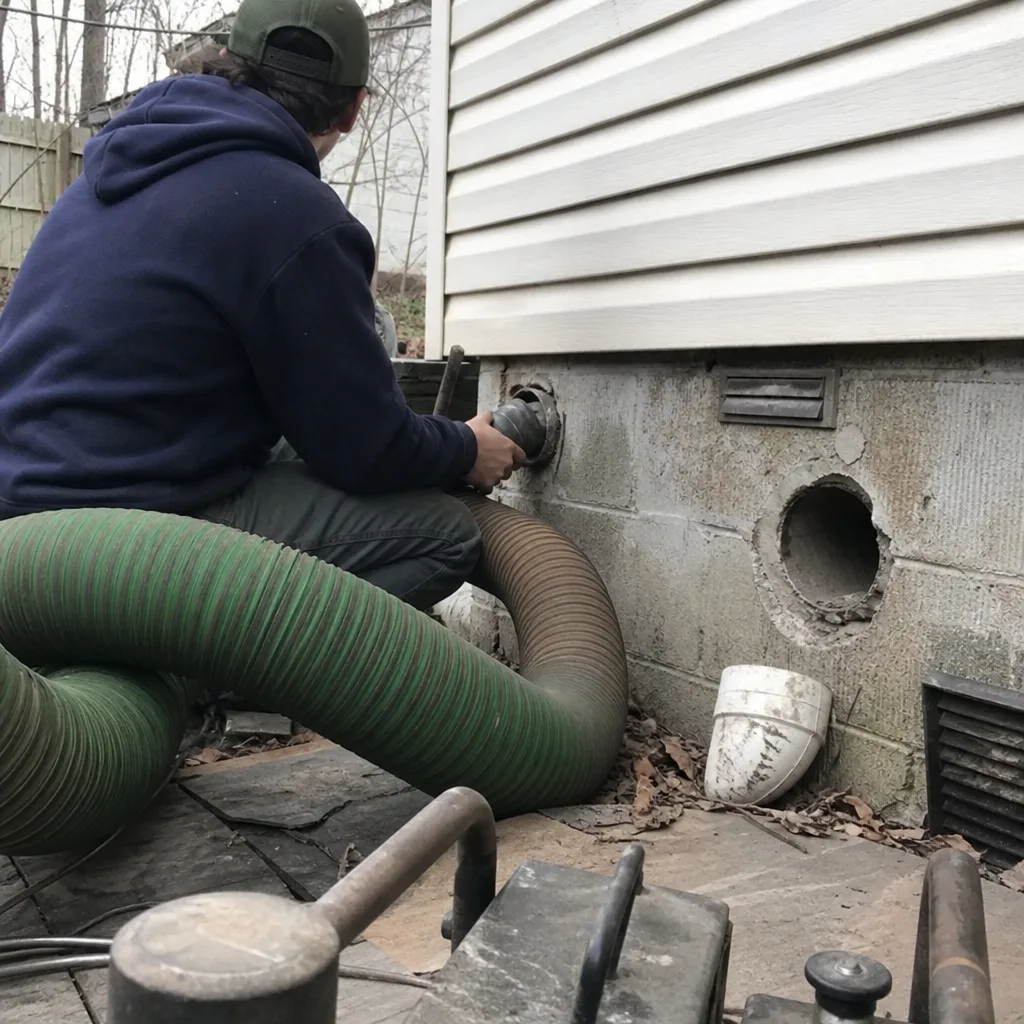 Before
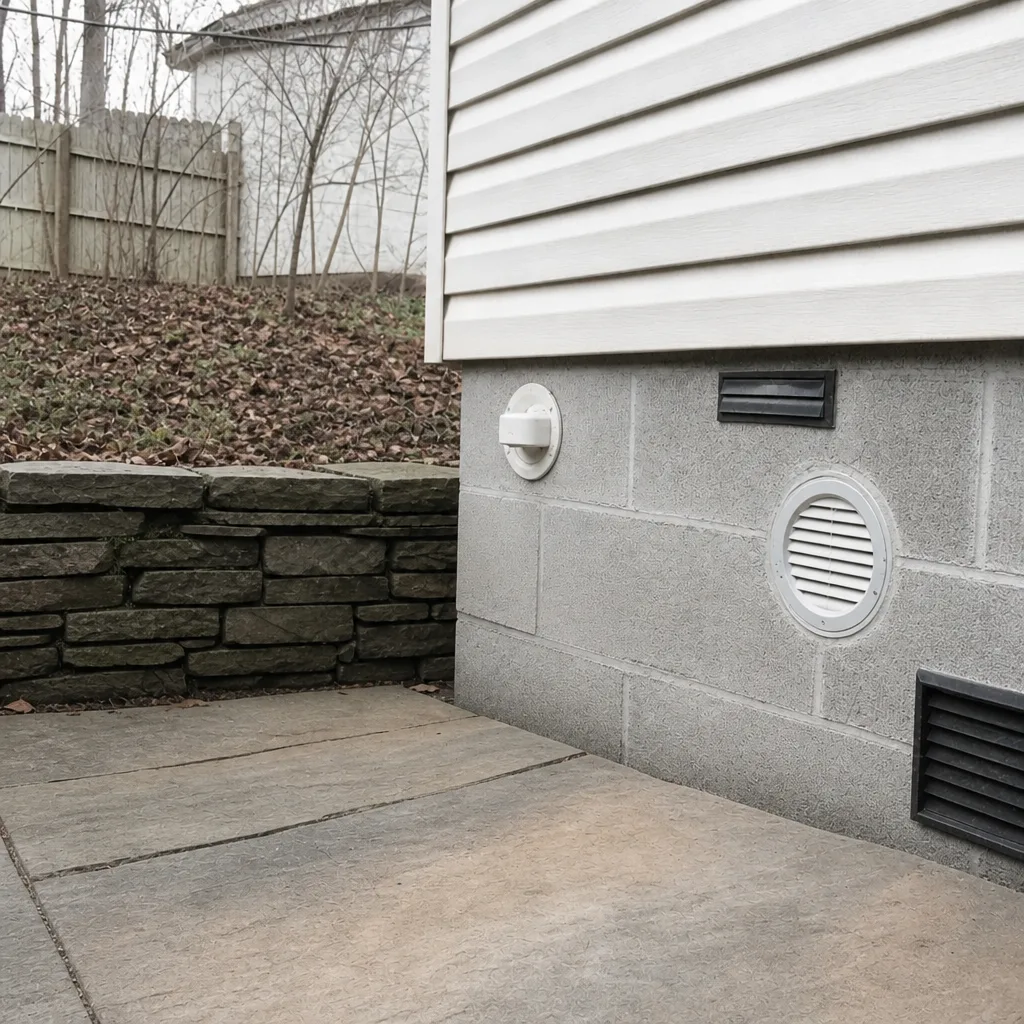 After
 Before
 After
When to Call a Professional
Some situations need a real contractor and not a wait-and-see. If you’ve recently bought a home in Raleigh and don’t know the duct history, an inspection and cleaning is the right first step. If anyone in the house has allergies or respiratory sensitivity that seems to worsen indoors, duct condition is worth investigating. Noticeable airflow problems, musty smells when the system runs, or visible dust around registers all point to something worth checking.
Dryer vent cleaning is separate but no less urgent; it addresses the leading appliance-related cause of residential fires, and it should be treated as safety maintenance rather than an optional add-on. If you’re in the Raleigh area and any of these apply, call (844) 834-2817 for a free estimate. We answer 24/7. Fast dispatch from 7am to 7pm, Sunday through Friday. Our technicians have up to 10 years of experience, and we can work with your existing Honeywell or Aprilaire setup.
Frequently Asked Questions
No. North Carolina does not require a specific license to perform air duct cleaning, which is why verifying NADCA membership, insurance, and equipment capability matters so much in Raleigh. Call (844) 834-2817 for a free estimate if you’d like to compare.
Ask them to name their vacuum, their agitation method, and their containment equipment, then check NADCA membership on the association’s site. A qualified contractor answers all of it with specifics. Call (844) 834-2817. We answer 24/7. Fast dispatch from 7am to 7pm, Sunday through Friday.
We price per system, not per vent, and the written estimate sets the final price. Get quotes in writing and compare scope, not just totals, since a low number often reflects a smaller scope. Call (844) 834-2817 for a free estimate.
If your ducts are intact and well-sealed, cleaning may be all you need. If the inspection finds disconnected or damaged sections, a cleaning-only company can’t fix them, which is why asking about repair capability up front saves trouble. Call (844) 834-2817 to discuss.
There’s no fixed schedule that fits every home. Recent purchase, allergy concerns, visible debris, or airflow problems are the reasons to investigate; routine cleaning without a specific need isn’t necessary in most houses. Call (844) 834-2817 for a free estimate if you’re unsure.
It requires agreement to a code of ethics and, for higher tiers, demonstrated technical capability, though it isn’t a license and doesn’t replace insurance verification. Verify the listing directly on the NADCA site. Call (844) 834-2817 to ask us about our membership.
The Bottom Line
Hiring an air duct cleaning contractor in Raleigh comes down to four checks: NADCA membership, verified insurance, specific equipment answers, and repair capability. None of those appear in the price, which is why price alone is a bad filter. Get the scope in writing, insist on before-and-after documentation, and ask what happens when damage is found. We repair what others only clean, and we’re glad to answer every question in this guide before you decide. Call (844) 834-2817 for a free estimate. We answer 24/7. Fast dispatch from 7am to 7pm, Sunday through Friday.
Written by the team at Jasper Duct Cleaning.