
Last updated November 15, 2026
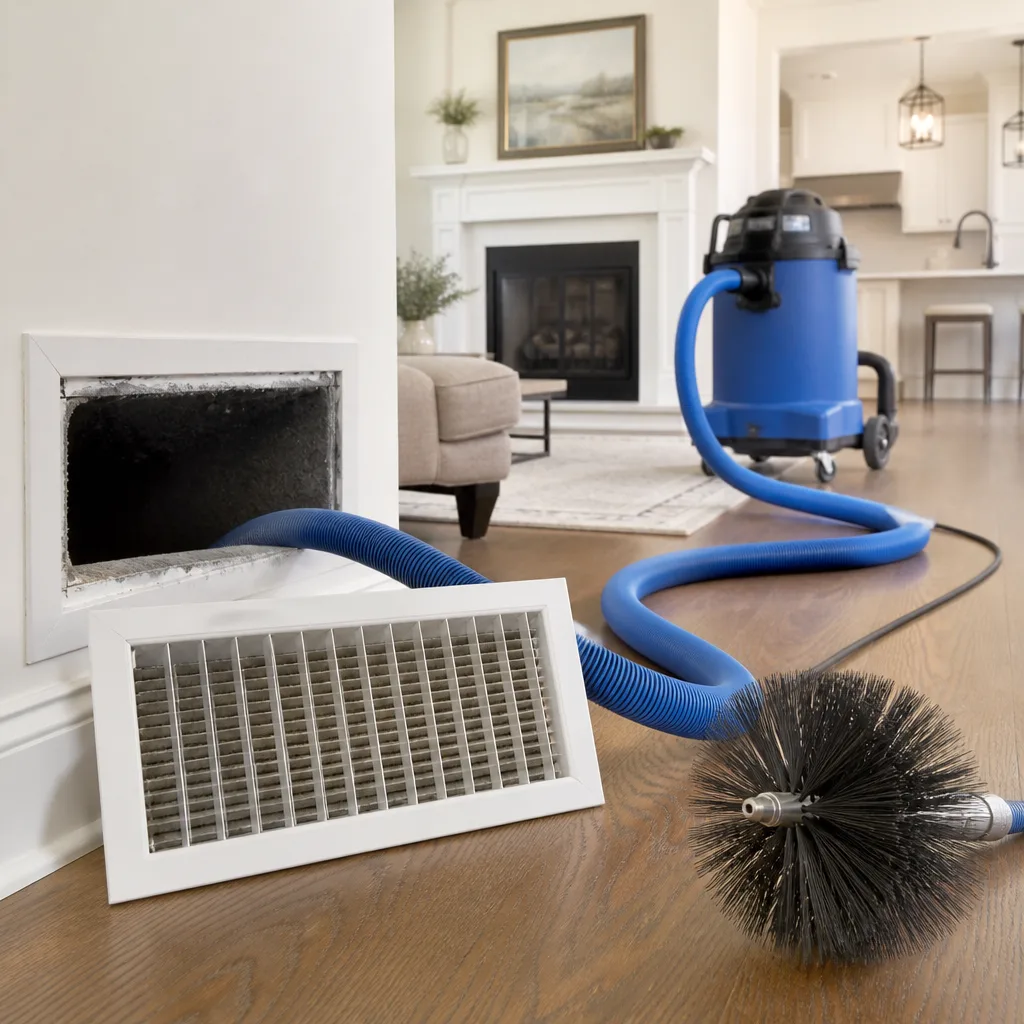 Whole-home duct cleaning
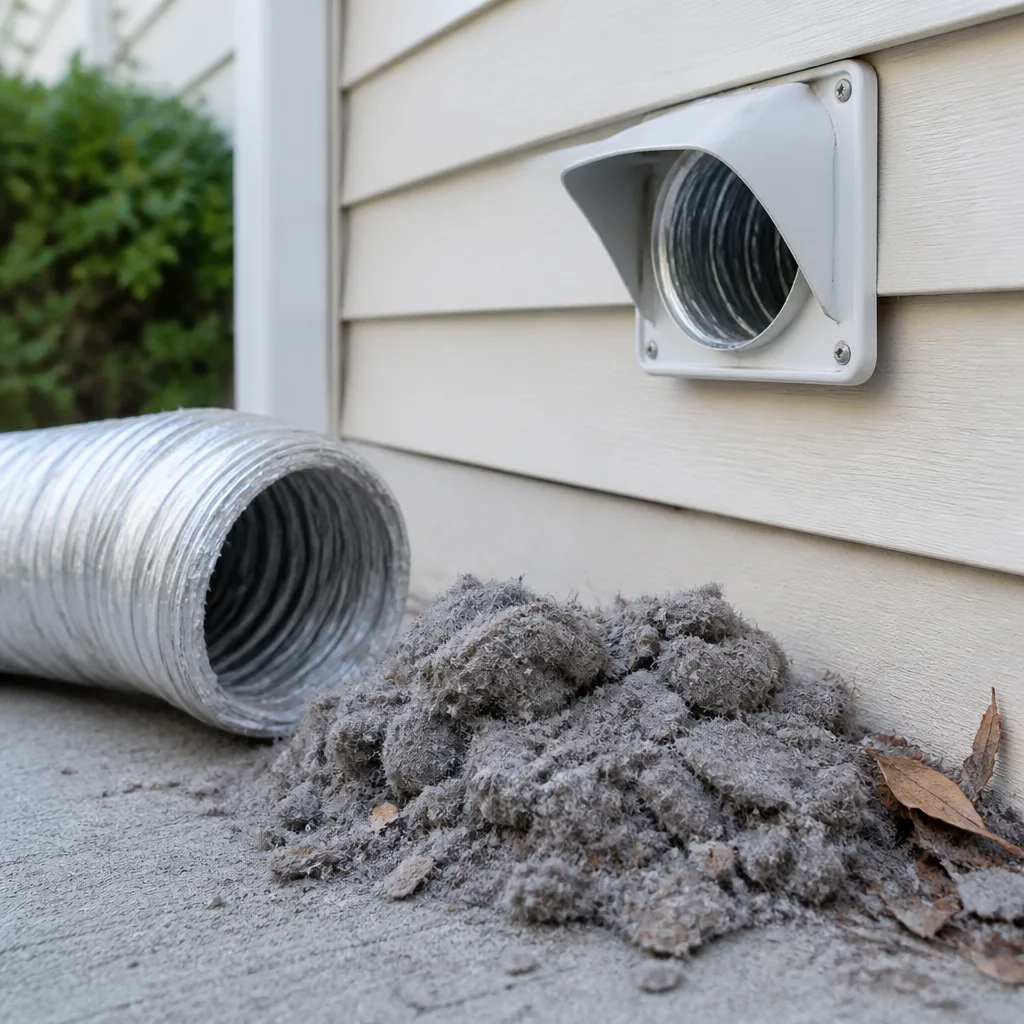 Dryer vent cleaning
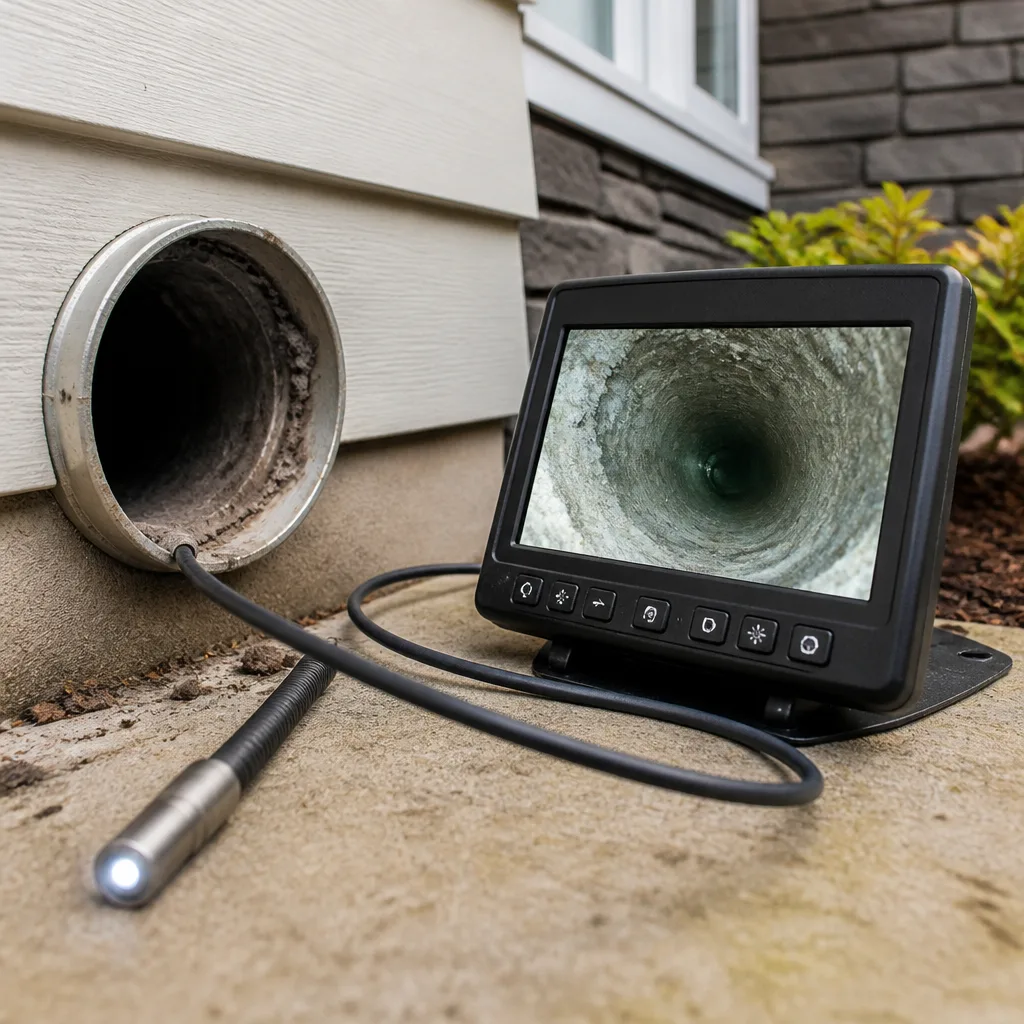 Camera inspection
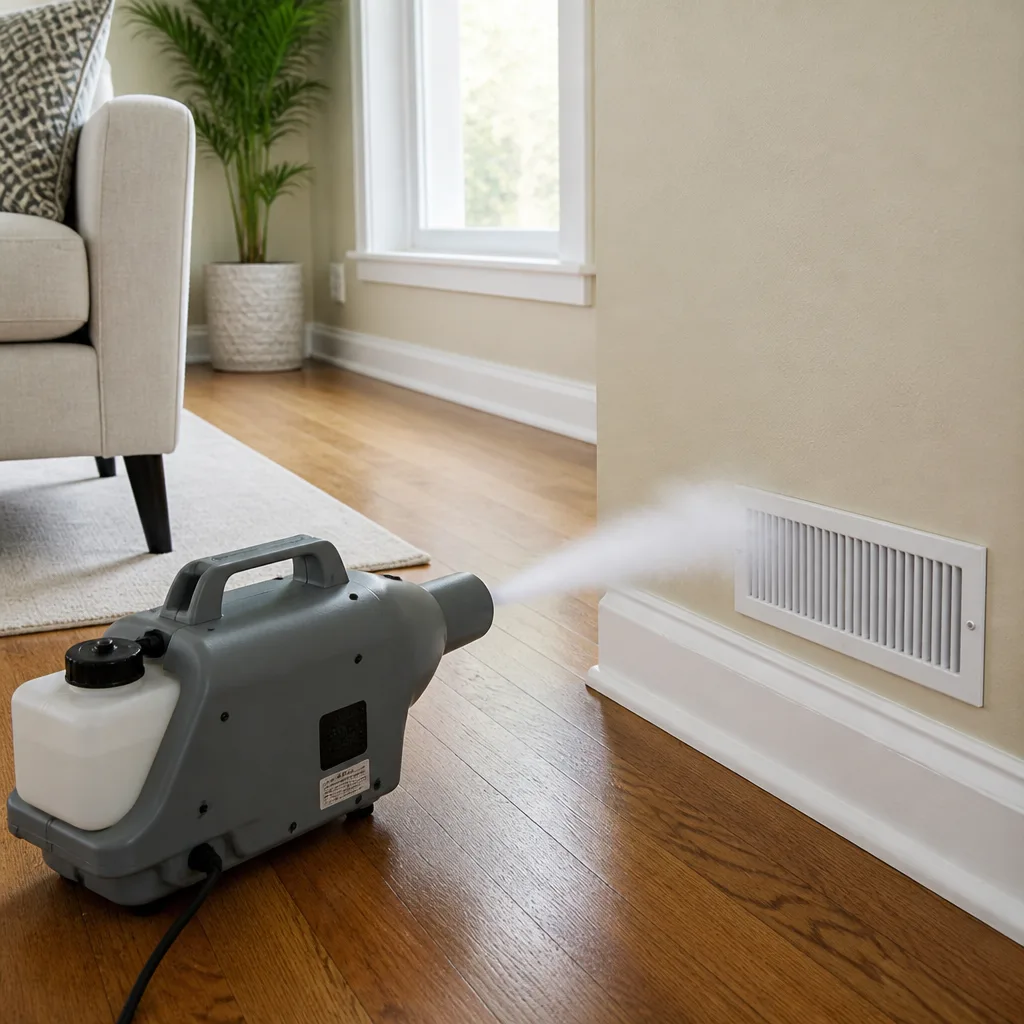 Sanitizing & deodorizing
Whole-system duct and dryer vent check with before-and-after photos - you see exactly what came out of your vents
That "$99 whole-house special" is a bait ad - the real number appears once they are in your hallway, or the "clean" is a shop-vac at the register. We photograph the inside of your ducts before and after instead.
Air Duct Cleaning Cost Breakdown: The Raleigh Homeowner’s Reference for 2026
The $99 duct cleaning special and the $800 duct cleaning quote are not the same service with a different price. In most cases they are physically different procedures performed with different equipment on different parts of your system. One runs a vacuum hose over your floor registers for twenty minutes. The other opens the trunk line, agitates compacted dust off the duct walls, contains the loosened debris so it doesn’t blow through your living room, and seals the gaps that let it all back in. Comparing those two numbers side by side tells you almost nothing. This guide breaks Raleigh duct cleaning cost down by task, equipment, and scope, so you can read a quote line by line instead of just staring at the total.
Quick Answer
A legitimate full-system air duct cleaning in Raleigh typically runs $350 to $900 for an average single-family home, with larger homes, dual systems, or heavy contamination pushing toward $1,200 to $1,500. A $99 to $150 offer almost always covers one component (often just a vacuum pass on the supply side) and leaves the return system, main trunk, and air handler untouched. The number that matters isn’t the headline price – it’s what the written estimate itemizes before any work starts.
Styles & brands we work with
- Whole-home duct cleaning
- Dryer vent cleaning
- Camera inspection
- Sanitizing & deodorizing
Table of Contents
- What Each Component of Your System Actually Costs to Clean
- How Equipment Determines the Price You’re Quoted
- Legitimate Add-Ons vs. Margin Plays
- Raleigh Home Factors That Move the Final Number
- What a Written Quote Should Itemize (and What’s Missing Means Trouble)
- When Cleaning Won’t Fix It: The Repair Line Item
- Dryer Vent Cleaning: A Separate Cost, A Separate Risk
- How to Compare Two Quotes Fairly
What Each Component of Your System Actually Costs to Clean
Air duct cleaning isn’t one service – it’s four or five, and a quote that treats them as one lump is impossible to evaluate. Here’s how the work breaks down for a typical Raleigh home, with honest estimated ranges for each part. Final pricing is always set by the written estimate after we see your system.
| Component | Typical Estimated Range | What the Work Involves |
|---|---|---|
| Supply duct runs | $150 – $350 | Brush agitation and HEPA vacuum extraction through every branch line feeding the registers |
| Return system | $100 – $250 | Return grilles, return trunks, and the negative-pressure side – often skipped by low-bid crews |
| Main trunk line | $100 – $250 | Access cuts, manual agitation of the largest ducts, and re-sealing the access points |
| Air handler interior | $75 – $200 | Cleaning the blower compartment and evaporator area where dust settles and recirculates |
| Full system (combined) | $350 – $900 | All of the above, plus before-and-after documentation |
The return side is where a lot of price difference hides. Returns pull air back through the system and collect the heaviest dust load. A crew that only touches supply registers can finish a “whole house” job in under an hour because they’re cleaning the easy half of the system. Ask any provider directly: does your quote include the returns and the air handler, or just the supply runs?
For a full picture of what a proper cleaning should cover, see our air duct cleaning page. If you’re reading this guide, you’re already asking the right questions – the point is to know which component each dollar on your quote maps to.
How Equipment Determines the Price You’re Quoted
Two crews can quote the same $500 and do wildly different work, because the equipment behind the number matters more than the number itself. In our experience, the tooling is the single biggest clue to whether a quote reflects real duct cleaning or a surface pass.
Air-whip-only systems
A compressed-air whip whips a hose around inside the duct to knock dust loose. It’s fast and inexpensive to run, and it works fine on light surface dust. On compacted debris – the kind that’s been baking onto duct walls for years – it tends to loosen the top layer and leave the rest stuck. If a quote is low and the provider only mentions a whip or a shop vacuum, that’s why.
Rotobrush brush agitation
Rotobrush systems feed a rotating brush through the duct and physically scour the walls, then pull the dislodged material out with a matched vacuum. That mechanical agitation is the industry standard for getting compacted dust off duct walls rather than just redistributing it. It also takes longer and requires more skill to run safely without damaging flex duct, which is part of why legitimate jobs cost more.
Truck-mount vacuum strength
A truck-mounted vacuum pulls far more air volume than a portable unit. That matters for long trunk runs and whole-house negative pressure, but it’s not automatically better if the crew isn’t also agitating the duct walls. Vacuum pulls loose debris; it doesn’t scrape it. The combination of agitation plus strong extraction is where real cleaning happens.
Containment and air-quality equipment
This is the piece homeowners rarely think to ask about, and it’s often what separates a professional job from a mess. We use Abatement Technologies air-containment machines to set up negative pressure in the work area, so loosened dust is captured rather than recirculating into the home’s air while the job is underway. If a quote doesn’t mention containment, ask how they prevent cross-contamination.
Equipment also affects whether a provider can handle existing whole-home filtration. We work with Honeywell and Aprilaire systems regularly and know how their components fit into a cleaning plan, so we’re not recommending a replacement out of unfamiliarity – we’re working inside what you already own. That compatibility is part of the value.
Legitimate Add-Ons vs. Margin Plays
Add-ons are where quotes balloon. Some of them are honest parts of the job. Some exist mainly to raise the invoice. Here’s how to tell them apart.
Legitimate add-ons
- Dryer vent cleaning. A genuinely separate service with its own process and urgency. Lint accumulation in a dryer vent is the leading appliance-related cause of residential fires, and it has nothing to do with your HVAC ducts. Treating it as its own line item is honest.
- Air duct repair. If a technician finds disconnected flex runs, crushed sections, or gaps at joints, closing them is real work that improves airflow. This is a repair, not a cleaning upgrade.
- Filter replacement. If your filter is spent at the time of service, swapping it is a reasonable small add.
Often unnecessary add-ons
- Blanket antimicrobial fogging. Fogging the whole system with a chemical is frequently sold as standard despite cleaning itself having already removed the source. If a provider pushes fogging before they’ve cleaned, ask what condition they’re treating and why.
- Deodorizing sprays. Masking a smell isn’t fixing the source. Odor usually traces back to contamination the cleaning should have removed.
- UV lights sold as required. Some homes benefit, but it’s an equipment addition, not part of duct cleaning – and it should be quoted separately, not bundled into a cleaning total.
Our rule is simple: if we can’t explain the reason for an add-on in one sentence tied to your system, it doesn’t go on the quote. That’s part of how we run the business, not a sales tactic.
Raleigh Home Factors That Move the Final Number
Two houses of the same square footage in Raleigh can end up with different quotes because of how they’re built. These are the variables that actually shift the number:
Slab vs. crawlspace construction
Homes with ducts running through a slab floor (common in some Raleigh subdivisions) can be harder to access, requiring more careful work to reach buried runs. Crawlspace-routed ductwork is usually more accessible but can be more prone to sagging and disconnection. Access difficulty translates directly into labor time and price.
Attic duct routing
Raleigh’s summers push attic temperatures very high, and ductwork running through an unconditioned attic in that environment degrades faster – joints loosen, insulation gets cooked, and flexible duct can sag. Attic runs are common in Raleigh construction, and cleaning them means navigating a hot space with gear. That’s a legitimate cost driver, not padding.
Square footage and number of returns
More square footage means more duct runs and more registers. More returns means more of the system’s negative-pressure side to clean. A house with two HVAC systems essentially has two systems’ worth of cleaning to do, which is why dual-system homes commonly land at the higher end of the range.
System age and condition
A home where ducts were installed decades ago and cleaned never typically needs more agitation time and more access cuts than a newer build. Heavy contamination isn’t a scare tactic – it’s visible on the inside of duct walls, and it’s the biggest single reason two similar homes get different quotes.
If you’re trying to figure out which of these applies to you, our team serving Raleigh can give a straight answer after seeing the layout. Estimates are free, and the written estimate is what sets the final price.
What a Written Quote Should Itemize (and What’s Missing Means Trouble)
A written quote is the whole game. Read it line by line with these checks:
- Every component listed separately. Supply runs, returns, main trunk, air handler. If the quote says “full system” with no breakdown, ask what “full” includes in writing.
- Equipment named. A reputable provider will tell you what they’re using and why. If the quote mentions a price but not a method, ask.
- Access and repair line items spelled out. Some systems need access cuts, which must be closed afterward. If that isn’t mentioned, ask whether closing them is included.
- No per-vent pricing. A per-vent quote can be a teaser that grows as they count vents once on site. Cost should be whole-system, not per-register.
- Before-and-after photos promised. If the quote promises documentation, you have a way to confirm the work was done. If it doesn’t, ask for it.
- Final price stated as final. The written estimate should be the number – not a starting point that grows once the crew is in the house.
Red flags in a quote: no equipment mentioned, no returns in scope, a teaser price with “additional charges may apply,” or pressure to sign before you see the itemized list. Any of those is a reason to get another quote before you book.
When Cleaning Won’t Fix It: The Repair Line Item
Sometimes the honest answer is that cleaning alone won’t solve the problem. If your ducts have disconnected joints, crushed sections, gaps at the seams, or a sagging run in the attic, cleaning the duct interior will help, but air will still leak out of the damaged spots. Repair closes those gaps.
This is where our approach differs from a cleaning-only crew. We handle Jasper Duct Cleaning work and the repair side as one provider, so a technician who finds a disconnected run during a cleaning can address it rather than handing you off to a subcontractor. That matters for airflow and for the price, because repair work quoted separately from cleaning usually costs more than combining them in a single visit.
If airflow in one room is noticeably weak or you can hear a rattle behind a wall, mention it when you call. It changes what the visit covers and it’s better to know before the technician arrives.
Dryer Vent Cleaning: A Separate Cost, A Separate Risk
Dryer vent cleaning isn’t a duct-cleaning upsell. It’s a fire-safety service with its own process, and in our view it deserves to be priced and explained on its own terms. The leading appliance-related cause of residential fires is lint that has built up in a dryer vent and ignited; the vent is the only path the heat has out of your dryer.
On a typical Raleigh home, this means removing lint from the vent run from the dryer to the exterior, checking the termination flap to be sure it opens freely, and confirming the run isn’t crushed behind the dryer. It’s a modest line item compared to full duct cleaning, and worth doing on its own schedule – not tacked onto a duct job as an afterthought. Learn more on our dryer vent cleaning page.
How to Compare Two Quotes Fairly
The fastest way to compare quotes is to score them on scope, not price. Use this checklist:
- Does the quote list supply, returns, main trunk, and air handler separately?
- Does it name the equipment the crew will use?
- Does it mention containment – how dust is kept out of the living space?
- Does it include documentation (before-and-after photos) of the work as done?
- Is the final price stated, or does the quote hint it could grow?
- Does it include any needed repair items, or exclude them?
A $250 quote that passes all six is worth more than a $700 quote that fails four. And a $99 quote that fails all six isn’t really $99 – you’ll find that out when the technician arrives.
Common Mistakes to Avoid
- Comparing totals instead of scopes. Two quotes with the same headline number can cover completely different amounts of system. Read the scope before you compare the price.
- Accepting per-vent pricing. A per-vent quote can be a low opener that grows once they count every register in your Raleigh home. Insist on a whole-system price in writing.
- Assuming the returns are included. Many low-bid quotes cover supply only. The returns and air handler are where heavy dust collects and where cross-contamination starts.
- Letting a fogging add-on substitute for cleaning. A spray doesn’t remove contamination – cleaning does. If fogging is offered before cleaning, ask what it’s treating.
- Signing without a written itemization. If the quote is verbal or just a number, get it in writing with each component listed before work starts.
- Ignoring attic duct condition. In Raleigh’s hot summers, duct runs in the attic can sag and separate. A quote that doesn’t mention inspecting them has a blind spot.
- Skipping dryer vent cleaning on the assumption it’s part of the duct job. It’s a separate service with a separate fire-safety purpose. Check that it’s on the list if you want it done.
See the difference
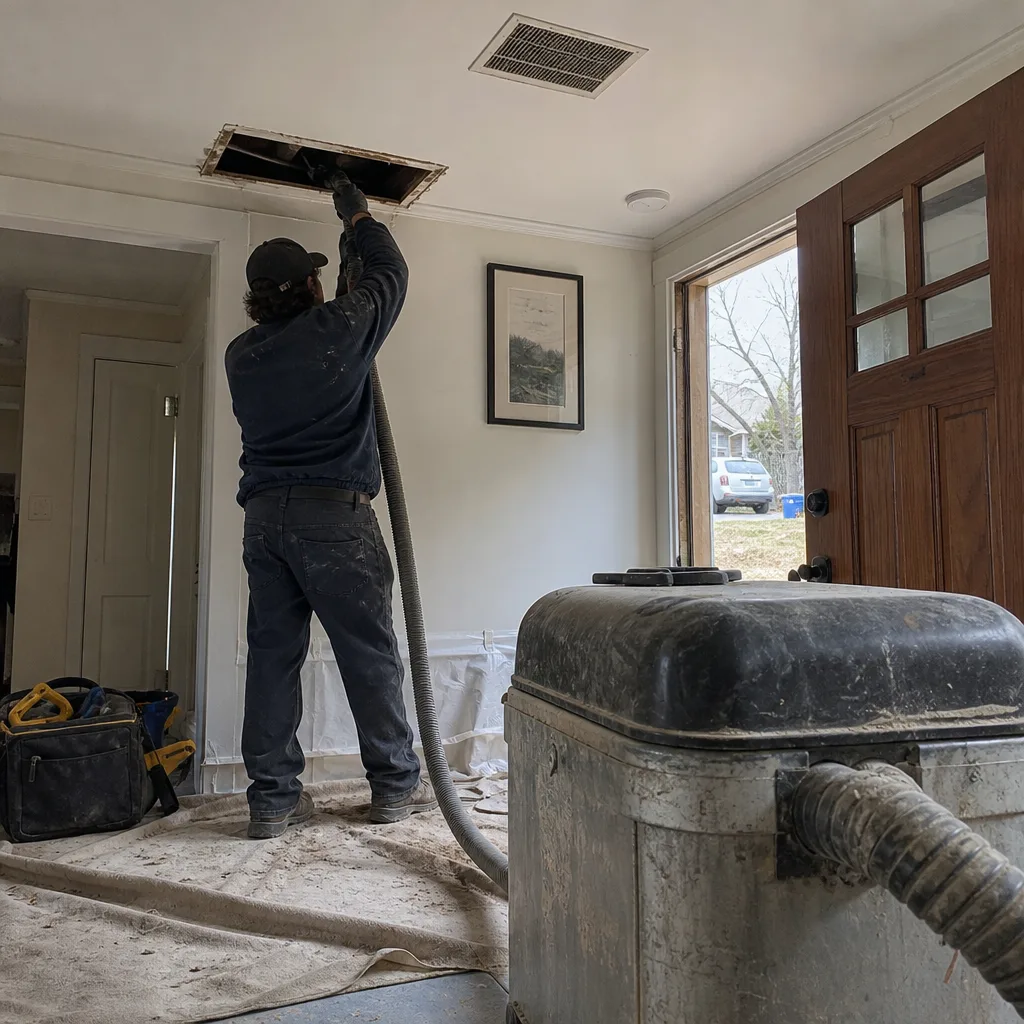 Before
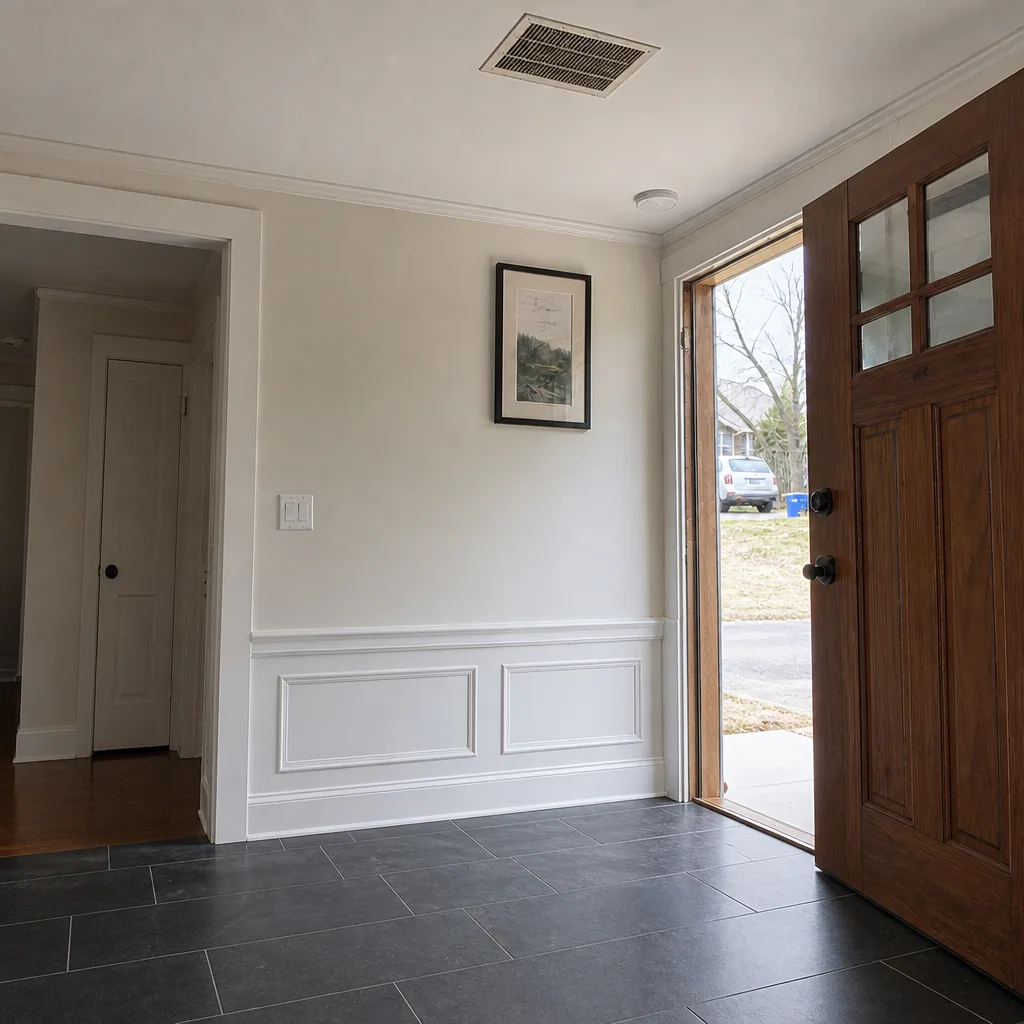 After
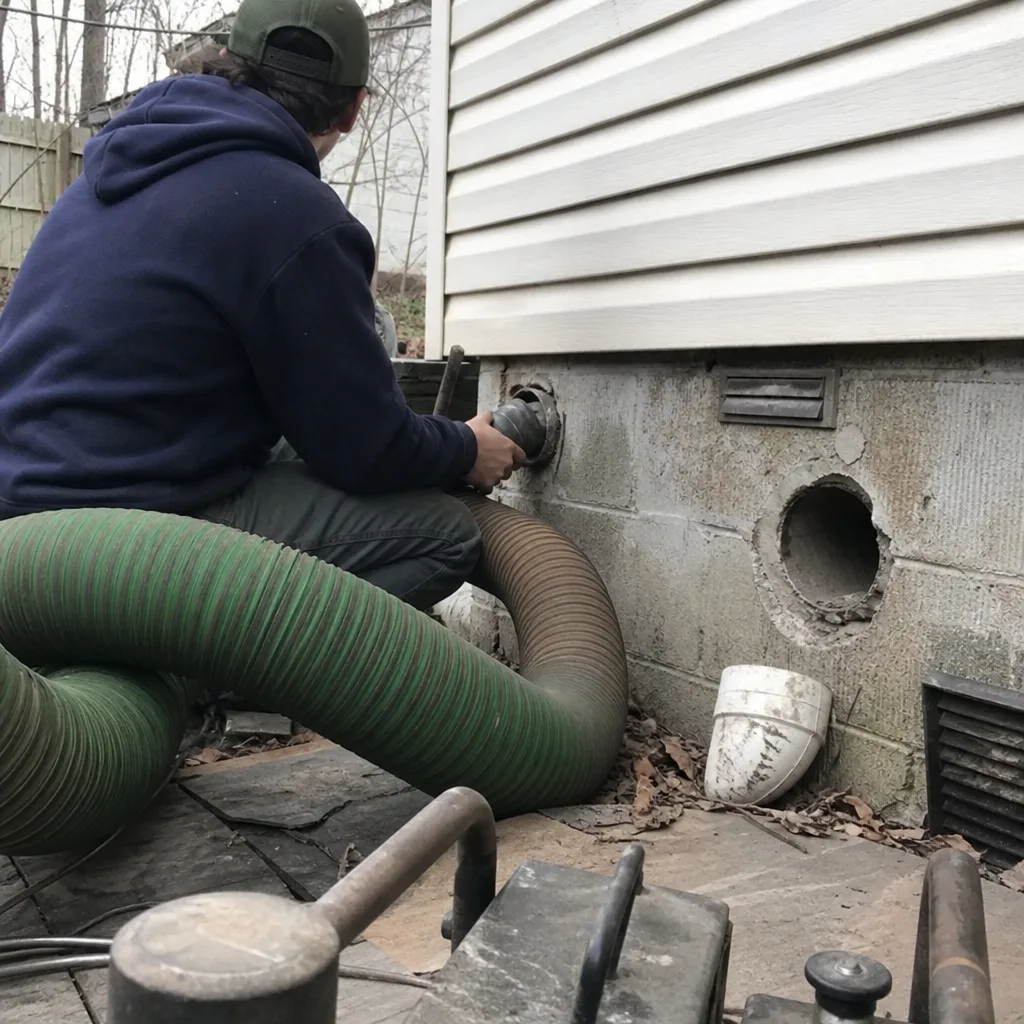 Before
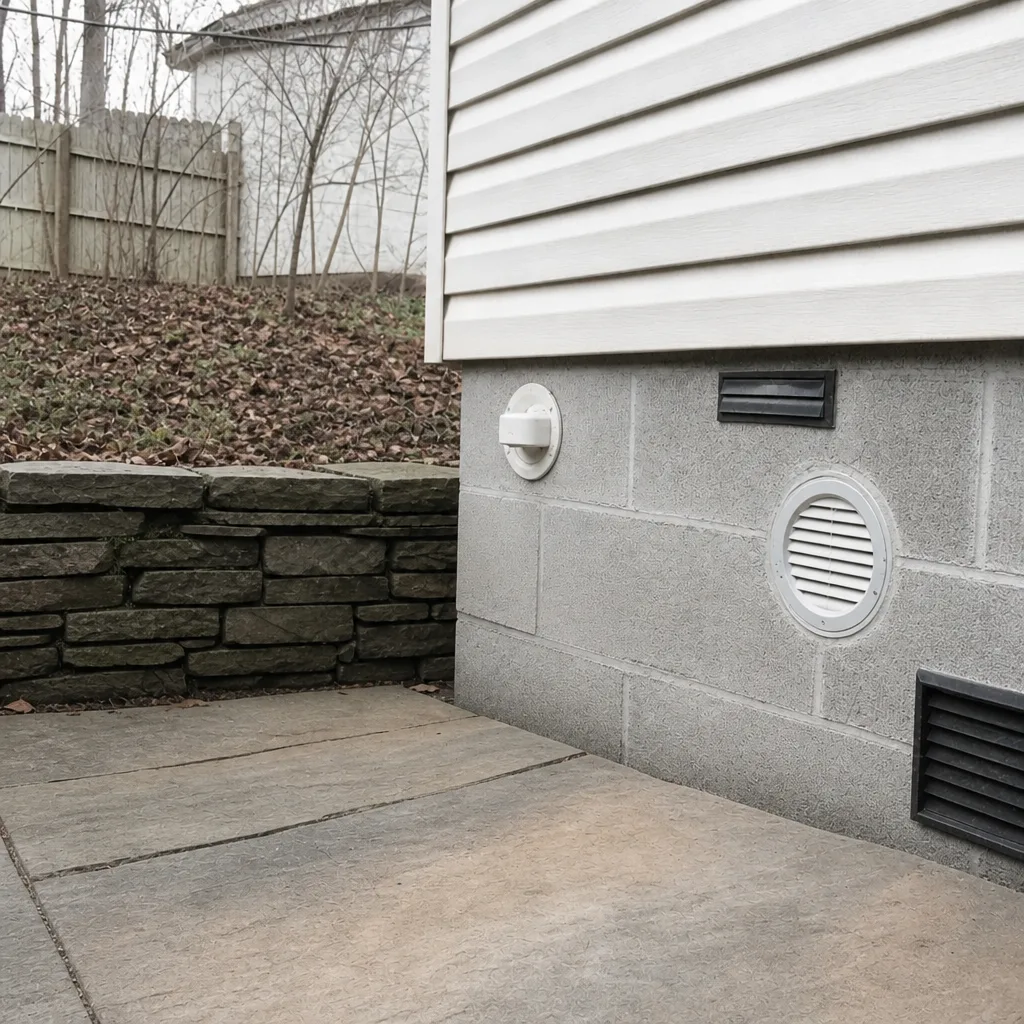 After
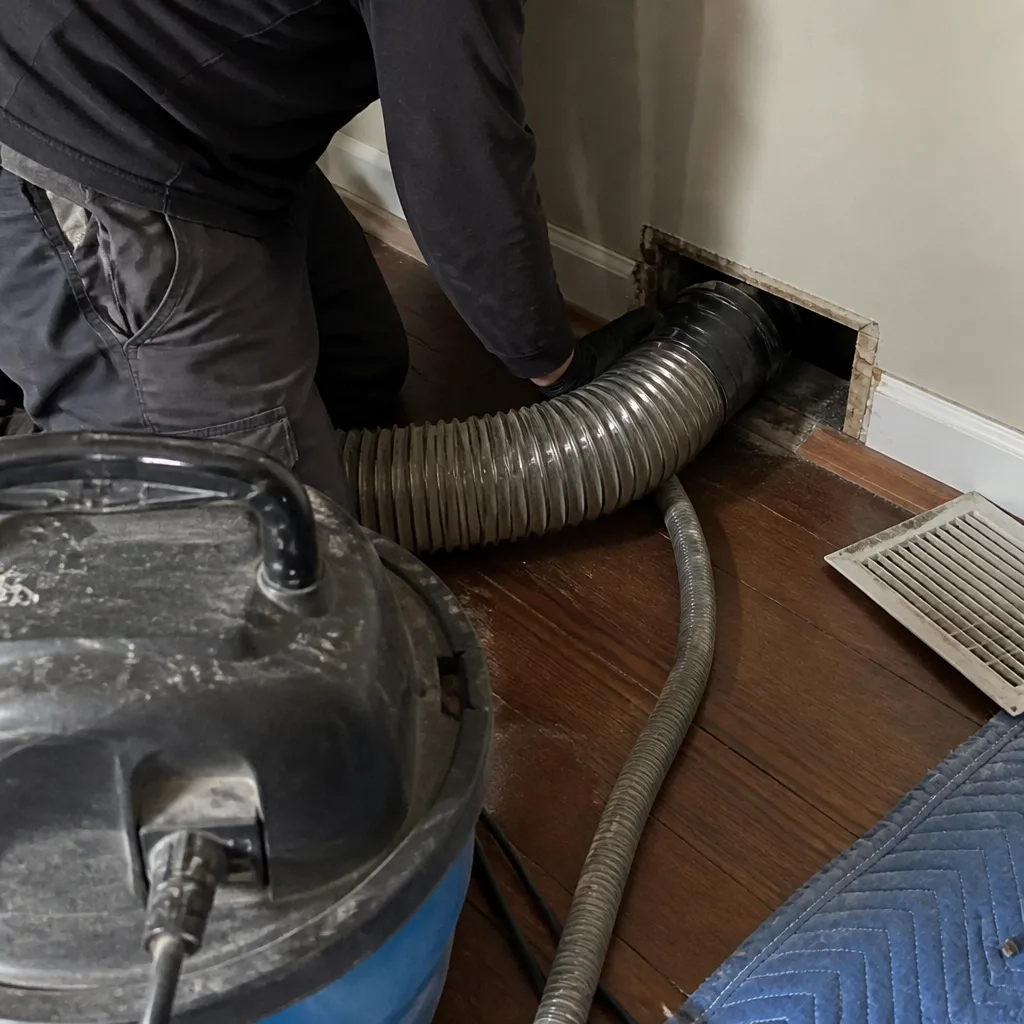 Before
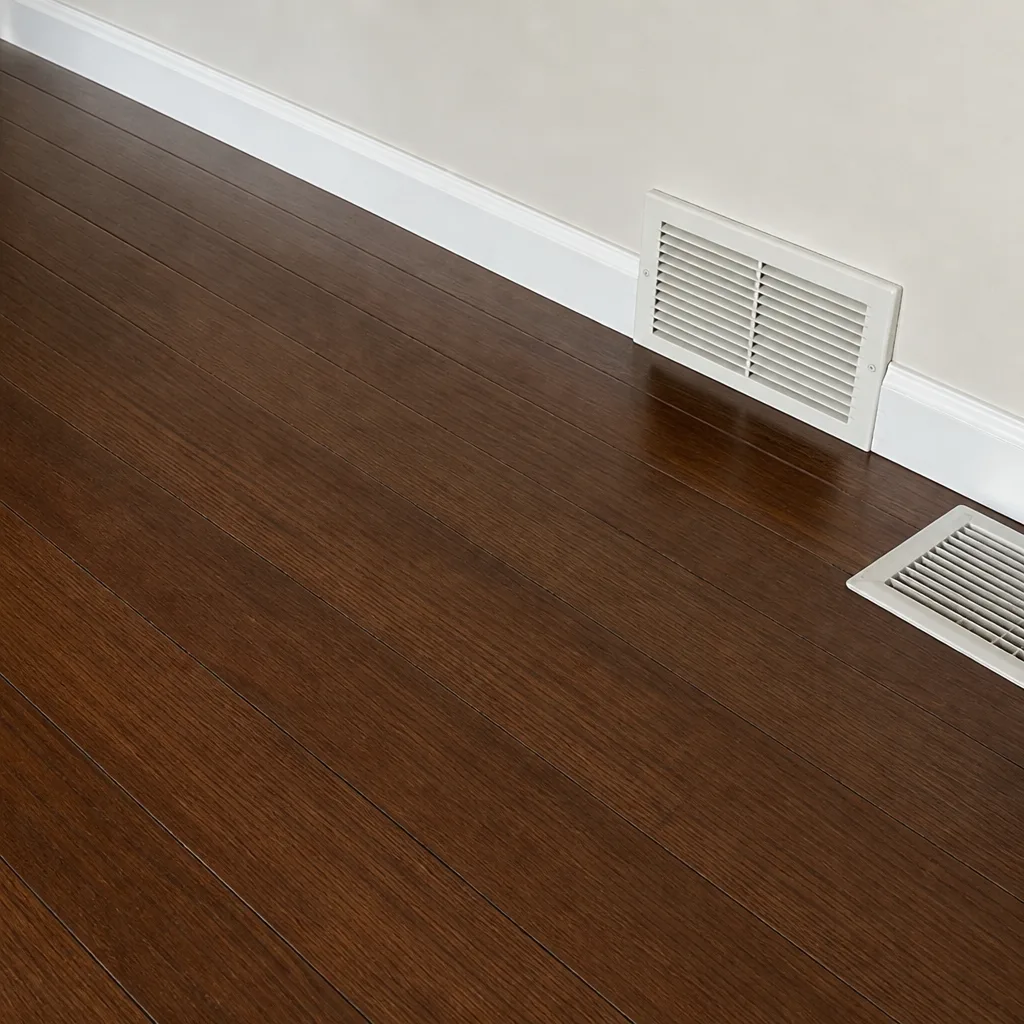 After
When to Call a Professional
Call a professional when airflow in one or more rooms is noticeably weak, when you can see dust streaking out of a register, or when a recent home purchase leaves you unsure about the system’s history. Allergies that worsen when the HVAC runs, musty smells when the system kicks on, and visible dust around return grilles are all signs worth a professional look. If you hear rattling or a whistle in the walls, that can indicate a disconnected run that needs repair, not just cleaning. Jasper Duct Cleaning offers free estimates in Raleigh – call (844) 834-2817. We answer 24/7, with fast dispatch from 7am to 7pm, Sunday through Friday.
A quick caveat: never attempt to disconnect or open duct runs or the air handler yourself. Wiring and refrigerant lines often sit inside or alongside these components, and a mistake can cause injury or an expensive repair. This is work for a trained technician, not a weekend project.
Frequently Asked Questions
Most full-system residential air duct cleanings in Raleigh run between $350 and $900, with larger homes, dual systems, or heavily contaminated ductwork reaching $1,200 to $1,500. The exact number depends on how many components are in scope – supply runs, returns, main trunk, and air handler – and the condition of the system. Call (844) 834-2817 for an exact quote – estimates are free.
Cheap quotes are often cheaper because they cover less: usually just a vacuum pass on the supply registers, with the returns and air handler left out. A $99 service and an $800 service are frequently different procedures, not the same job at two prices. Ask any provider to itemize each component in writing before you book, and walk away if they won’t.
Ask for before-and-after photos of your own ducts, taken with the same component in frame. A provider that promises documentation gives you a way to verify the work after the fact. If the quote doesn’t mention photos, ask the technician to take them.
For most homes, every three to five years is a reasonable rhythm, though a recent move, a renovation, or a pet household can shorten the interval. If you notice weak airflow or visible dust around your registers, that’s a better signal than a calendar reminder. Call (844) 834-2817 and we’ll help you judge whether it’s time – estimates are free.
It can. Hot summers mean ductwork running through unconditioned attics degrades faster, which often means more access work and more agitation time during cleaning. Homes with ducts in the slab or crawlspace can be more labor-intensive to access. Both are legitimate cost factors – ask the technician to explain what applies to your home.
Dryer vent cleaning is worth it on its own schedule because lint in the vent is the leading appliance-related cause of residential fires – it’s a genuine safety service, not a margin play. Blanket antimicrobial fogging, on the other hand, is often unnecessary if the cleaning is done properly. Judge each line item on its own merits.
The Bottom Line
Duct cleaning pricing in Raleigh isn’t really a price question – it’s a scope question. The number on a quote only means something once you know which components are covered, what equipment is being used, and whether the estimate is final. Our technicians have up to 10 years of experience, and we use Rotobrush and Nikro equipment with Abatement Technologies containment because that combination produces measurable before-and-after airflow instead of a surface pass. We repair what others only clean, agree one flat price per system before work starts, and show the photos to prove it. Call (844) 834-2817 for a free estimate. We answer 24/7. Fast dispatch from 7am to 7pm, Sunday through Friday.
Written by the team at Jasper Duct Cleaning.