
Last updated November 15, 2026
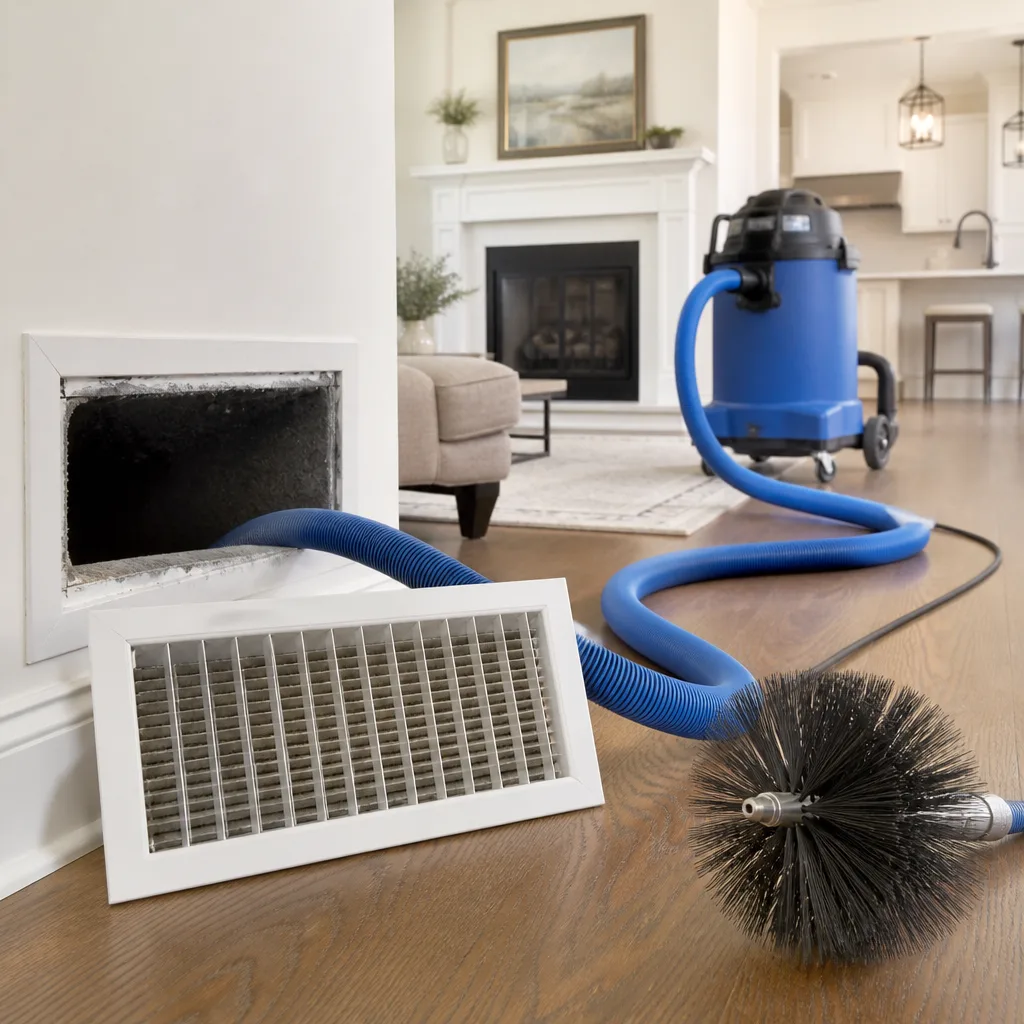 Whole-home duct cleaning
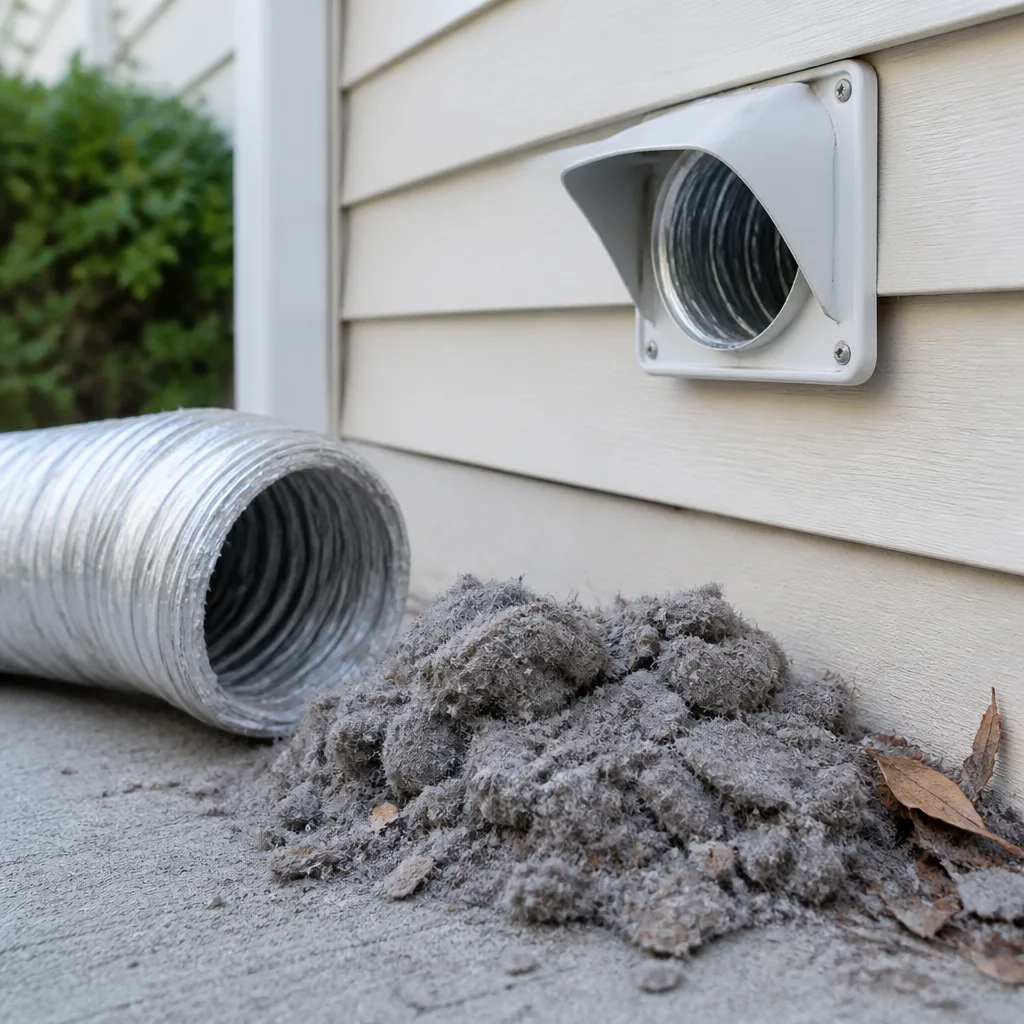 Dryer vent cleaning
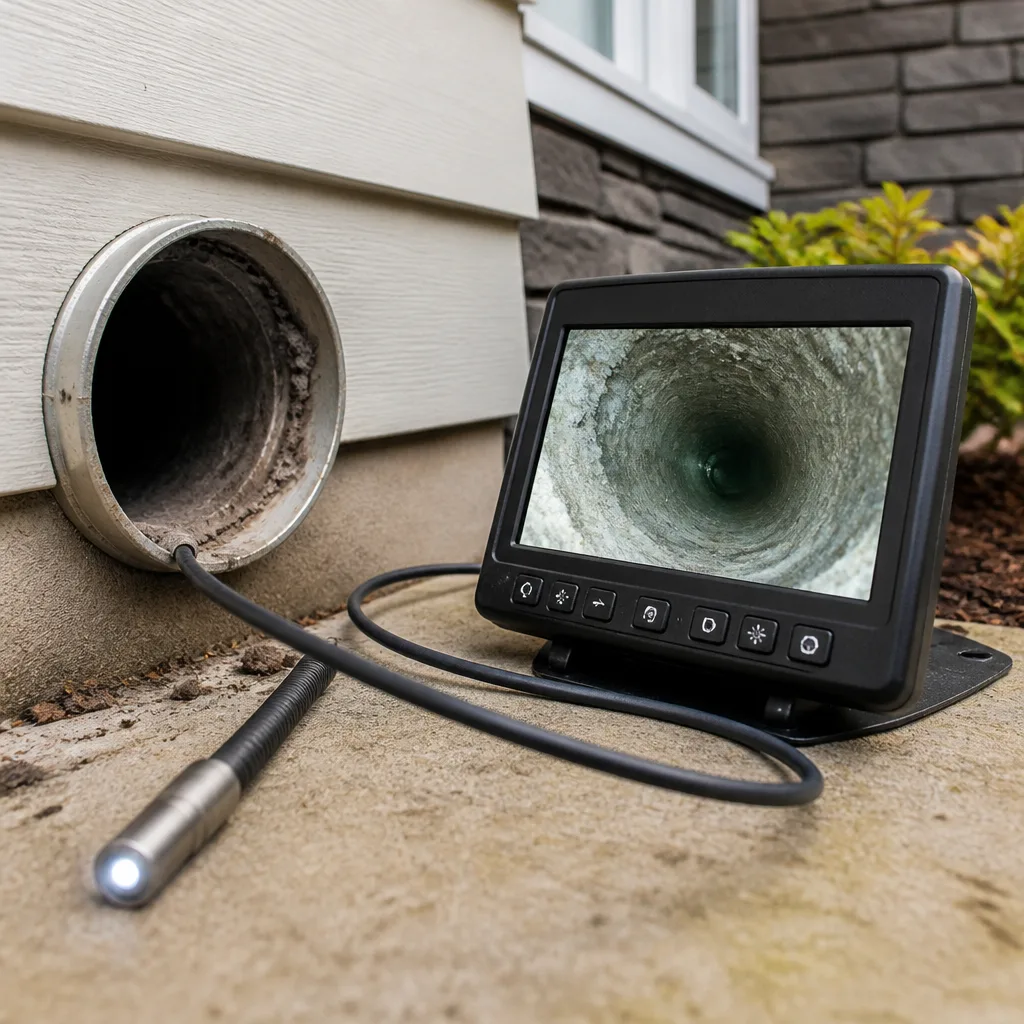 Camera inspection
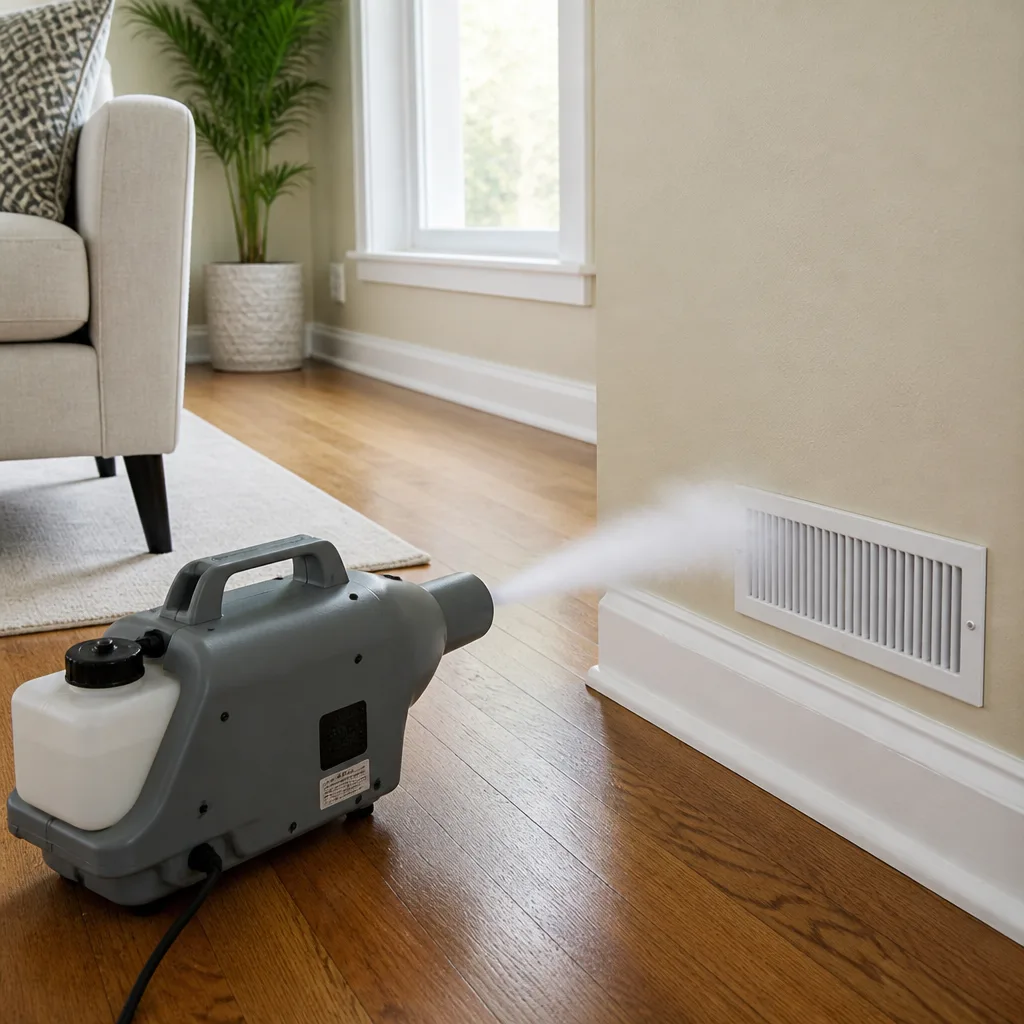 Sanitizing & deodorizing
Whole-system duct and dryer vent check with before-and-after photos - you see exactly what came out of your vents
That "$99 whole-house special" is a bait ad - the real number appears once they are in your hallway, or the "clean" is a shop-vac at the register. We photograph the inside of your ducts before and after instead.
Air Duct Cleaning Emergency Preparedness Guide for Raleigh Homes
Most Raleigh homeowners have a storm plan. They know where the flashlights are, they’ve thought about the freezer, and they’ve got a rough idea of what to do if the power goes out for a few days. What almost nobody plans for is what happens to the duct system after the water recedes or the ice melts. Hurricane Helene proved that inland flooding can reach crawlspaces and attic runs here, and when it does, a clean, dry, functioning duct system can turn into a mold incubator and a whole-house contamination source in under 48 hours. This guide covers the specific post-event duct risks Raleigh homeowners actually face and exactly what to do in the first two days.
Quick Answer
After a flood, fire, or ice event in Raleigh, treat your duct system as compromised until a specialist has inspected it. If crawlspace ducts sat in standing water, if smoke entered the return side, or if attic runs took impact or freeze damage, do not run the HVAC until the system has been inspected and cleaned or repaired. Most duct problems in the first 48 hours are recoverable. Most duct problems left past that window become replacement jobs.
Styles & brands we work with
- Whole-home duct cleaning
- Dryer vent cleaning
- Camera inspection
- Sanitizing & deodorizing
Table of Contents
- Post-Flood Protocol: What to Do With Submerged Crawlspace Ducts
- Post-Fire and Smoke Contamination: Why Surface Cleaning Isn’t Enough
- Ice Storms and Freeze Events: Attic Ducts and Vapor Barriers
- Who to Call in What Order After an Event
- What to Document for Insurance Before Work Begins
- Repair or Replace? How to Tell What You’re Facing
- What Proper Post-Event Duct Work Actually Involves
- Building Duct Preparedness Into Your Storm Plan
Post-Flood Protocol: What to Do With Submerged Crawlspace Ducts
If your crawlspace took on water and your duct runs sat in it, the clock starts the moment the water recedes. Flex duct is the most vulnerable: the outer vapor barrier wicks moisture, the inner fiberglass insulation soaks it up like a sponge, and once that insulation is saturated, it doesn’t dry out. It stays wet, it stays dark, and it becomes an ideal surface for mold growth. Fiberglass duct board has the same problem – water gets into the matrix and stays there. Sheet metal duct can sometimes be saved, but the insulation lining inside it usually cannot.
Here’s the practical sequence for the first 48 hours after floodwater touches your crawlspace:
- Do not run the HVAC. Turning on the air handler pushes air through wet duct and distributes moisture, mold spores, and whatever the floodwater carried into every room of the house.
- Kill the power to the air handler at the breaker if there’s any chance water reached the unit or the electrical connections.
- Photograph everything before you touch it. Water lines on duct, standing water in the crawlspace, the condition of the vapor barrier. This matters for insurance.
- Get the crawlspace drying with ventilation and dehumidification, but understand that duct that was submerged usually needs replacement regardless of how well the crawlspace dries.
- Call for an inspection before any cleaning, repair, or restoration work begins so the damage is documented in its original condition.
What 48 hours of inaction does is straightforward: saturated fiberglass insulation inside flex duct begins to break down, the inner liner delaminates, and what might have been a cleaning-and-repair job becomes a full duct replacement. In our experience across Raleigh crawlspace systems, the homeowners who move fastest on inspection are the ones who keep their duct system instead of replacing it.
Post-Fire and Smoke Contamination: Why Surface Cleaning Isn’t Enough
Smoke doesn’t just coat surfaces – it moves. During a house fire, even a small one, the HVAC system pulls smoke into the return side and deposits soot and combustion particles throughout the supply runs, plenum, and often the air handler cabinet itself. The research on smoke residue is clear that the fine particulates and acidic compounds left behind continue to off-gas and corrode metal components long after the fire is out. A visible wipe-down of the registers is not duct cleaning.
Why surface cleaning alone fails:
- Smoke particles lodge in the seams, joints, and interior walls of duct runs where a rag never reaches.
- The return system is the primary collection point – it’s the intake, and it takes the heaviest load.
- Acidic residue from smoke can pit sheet metal and degrade flex duct liner over time.
- The air handler blower wheel, evaporator coil, and cabinet interior absorb smoke and continue to release odor into the airstream.
Proper smoke remediation of a duct system requires source-capture vacuum equipment with HEPA-rated filtration and mechanical agitation to dislodge residue from duct walls. That’s why we use Rotobrush brush-agitation systems alongside Nikro HEPA vacuums on smoke jobs – the brush physically breaks loose what’s bonded to the duct interior, and the HEPA vacuum captures it at the source rather than letting it recirculate into the living space. A smoke-contaminated return system that only gets a surface pass will keep smelling like the fire for months. If your Raleigh home has had a fire, get an inspection before you turn the system back on.
Ice Storms and Freeze Events: Attic Ducts and Vapor Barriers
Raleigh gets ice. Sustained freeze-thaw cycles are hard on attic duct runs in a way that summer heat isn’t, because water expands when it freezes and duct connections don’t tolerate that movement well. The typical failure pattern after an ice storm looks like this:
- Condensation forms on cold duct surfaces as warm interior air meets cold attic air.
- That moisture freezes overnight, expands, and stresses the duct connections, tape, and mastic seals.
- The seal fails, and the next thaw cycle pushes water into the joint and into the duct insulation.
- Airflow loss follows as disconnected or crushed runs dump conditioned air into the attic instead of the rooms.
Ice dams on the roof can also push water into attic spaces where duct runs are strapped, and that water finds the lowest point – often the vapor barrier and the duct insulation beneath it. If you notice a room that suddenly heats or cools poorly after an ice event, or you hear a whistling or hissing at a register, a disconnected or crushed duct run is a likely cause. Attic duct connections that fail during freeze-thaw are one of the most common repair calls we handle in Raleigh after winter weather, and they’re also one of the easiest to miss because the system still runs – it just runs badly.
The vapor barrier under the house matters in freeze events too. A torn or displaced vapor barrier lets ground moisture migrate up into the crawlspace and condense on duct surfaces, which sets up the same wet-insulation problem that flooding does, just more slowly.
Who to Call in What Order After an Event
The order matters, and getting it wrong costs money. Here’s the sequence that protects your system and your claim:
- Your insurance company first – before any cleanup or repair. Open the claim and get the damage documented by photos before anything is moved.
- A water remediation or restoration company if there’s standing water or structural drying needed. They handle the building envelope, not the ducts.
- An HVAC contractor to assess the air handler, coil, and any electrical components that got wet. The equipment side has to be declared safe before the duct side gets cleaned.
- A duct specialist for inspection, cleaning, and repair of the duct system itself, including any replacement of flooded flex or duct board.
Why this order? Because a remediation company isn’t equipped to clean and repair duct interiors, and an HVAC contractor isn’t set up to do source-capture duct cleaning. And a duct cleaning crew that arrives before the claim is opened may do work the adjuster then won’t cover. Getting the sequence right keeps the paper trail clean and makes sure each trade stays in its lane. Jasper Duct Cleaning handles the duct inspection, cleaning, and repair side – including the repair work most duct cleaners don’t do – so you’re not bouncing between three providers to get one system back into shape.
What to Document for Insurance Before Work Begins
Adjusters need evidence of the original condition, not the post-cleanup condition. Once cleaning or repair starts, the damage is gone and there’s nothing to photograph. Build your file before anyone touches the system:
- Photograph the water line on crawlspace duct and any standing water in the crawlspace or attic.
- Photograph the interior of the duct where accessible – a phone photo down a register opening shows visible moisture, debris, or soot.
- Record a baseline airflow reading at each register if you can, or note which rooms are weak, strong, or dead. A simple note on which vents have no detectable airflow is enough to establish a before-and-after comparison.
- Keep the HVAC filter that was in place during the event. A loaded filter tells the adjuster a lot about what entered the system.
- Get a written inspection report from the duct specialist that identifies which runs are salvageable and which need replacement, with the reason.
- Save before-and-after photos from the cleaning or repair itself – a reputable provider will supply these, and they close the loop on the claim.
One more thing worth doing: get an airflow baseline reading while things are normal, not after a storm. A simple note of how strong each register blows before any event gives you a reference point that makes the insurance comparison airtight.
Repair or Replace? How to Tell What You’re Facing
The honest answer depends on what got wet and for how long. Here’s the general rule we work from:
- Flex duct that sat in water: replace. The insulation can’t be dried out reliably, and cleaning doesn’t remove mold from inside saturated fiberglass.
- Fiberglass duct board that took on water: replace the affected sections. The material itself is compromised.
- Sheet metal duct that got wet but not saturated: often salvageable with cleaning and drying if the interior lining wasn’t flooded.
- Duct that took smoke but not water: almost always salvageable with proper source-capture cleaning and mechanical agitation.
- Duct connections that failed in a freeze: repair, not replace – re-seal the joints, restore the connection, verify airflow.
We repair what others only clean, and that distinction matters most after an event. A cleaning-only crew will clean a duct system that has disconnected runs and call it done; the disconnected run is still dumping air into the attic. A proper post-event job includes sealing gaps, reconnecting failed joints, and confirming airflow at every register before the technician leaves. If a provider can’t repair what they find, you’ll end up paying twice.
What Proper Post-Event Duct Work Actually Involves
You should be able to ask any duct company what equipment they use and get a real answer. Here’s what a proper post-event job looks like and why each piece exists:
- Negative-air containment: Abatement Technologies air-quality machines create negative pressure in the work area so loosened debris doesn’t recirculate into your living space during cleaning. On a post-flood or post-fire job, this isn’t optional – you’re mobilizing contamination that was settled.
- Mechanical agitation: Rotobrush brush systems physically break compacted debris and residue off duct walls. Vacuuming alone doesn’t loosen what’s bonded to the interior surface.
- HEPA-rated source capture: Nikro HEPA vacuums capture fine particulates at the point of origin, which is the difference between cleaning and cross-contaminating the house.
- Repair capability: sealing, reconnecting, and restoring runs rather than just cleaning them.
- Before-and-after documentation: photos of the duct interior and airflow readings at each register, so you can see the change.
We also work inside existing air-quality setups, including Honeywell and Aprilaire whole-home filtration systems, so the cleaning process doesn’t disturb or bypass the equipment you already have. If your system has a media filter or UV component, it gets handled correctly rather than removed and forgotten.
Building Duct Preparedness Into Your Storm Plan
The best time to think about your duct system is before the storm, not after. A few low-effort steps make the recovery side much simpler:
- Know where your air handler breaker is and label it. In a flood or fire, killing power to the unit fast prevents contaminated air distribution.
- Photograph your duct system now – crawlspace runs, attic runs, the air handler, and the filter. A normal-condition photo file makes the after-event comparison obvious.
- Note your baseline airflow at each register. A quick handwritten note or phone video is enough.
- Locate your crawlspace access and vapor barrier condition so you can check for water intrusion quickly after a storm.
- Keep your HVAC filter changed and keep a spare on hand so you can swap it immediately after an event and preserve the loaded one as evidence.
Raleigh’s storm history makes this more relevant than it might sound. Between hurricane remnants, ice storms, and the occasional extended freeze, the weather here finds its way into crawlspaces and attics regularly. A little preparation on the front end means you’re acting on information instead of guessing when the next event hits.
Common Mistakes to Avoid
- Running the HVAC to “test” it after floodwater reached the duct. It distributes moisture and contamination through every room and turns a duct problem into a whole-house problem.
- Cleaning before the insurance claim is documented. Once the damage is cleaned, the adjuster has nothing to photograph, and the claim gets harder to support.
- Treating smoke odor as a surface issue. Wiping registers and running a plug-in air purifier doesn’t touch the residue inside the return system, and the smell returns as soon as the weather changes.
- Assuming attic duct that survived a freeze is fine because the system still runs. A disconnected run still moves air; it just dumps it into the attic instead of the bedroom.
- Hiring a cleaning-only crew for a job that needs repair. If the provider can’t seal gaps and reconnect runs, the cleaning is only half the job and you’ll pay for the other half separately.
- Skipping the crawlspace check after heavy rain. Water can pool under a vapor barrier and sit against duct insulation for days without a visible sign from inside the house.
- Not asking what equipment the company uses. If the answer is vague, the work will be too. Brand-specific answers – Rotobrush, Nikro, Abatement Technologies – tell you the job is set up for real source capture.
See the difference
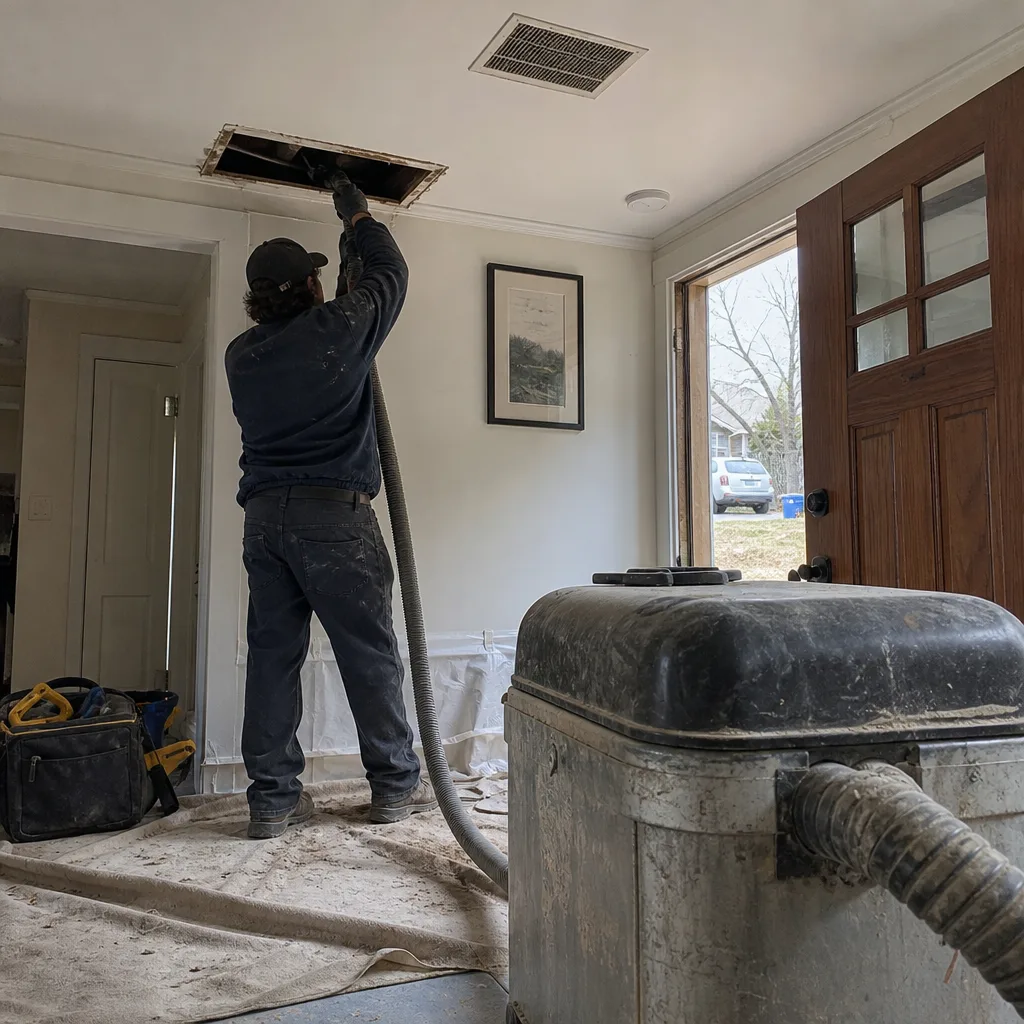 Before
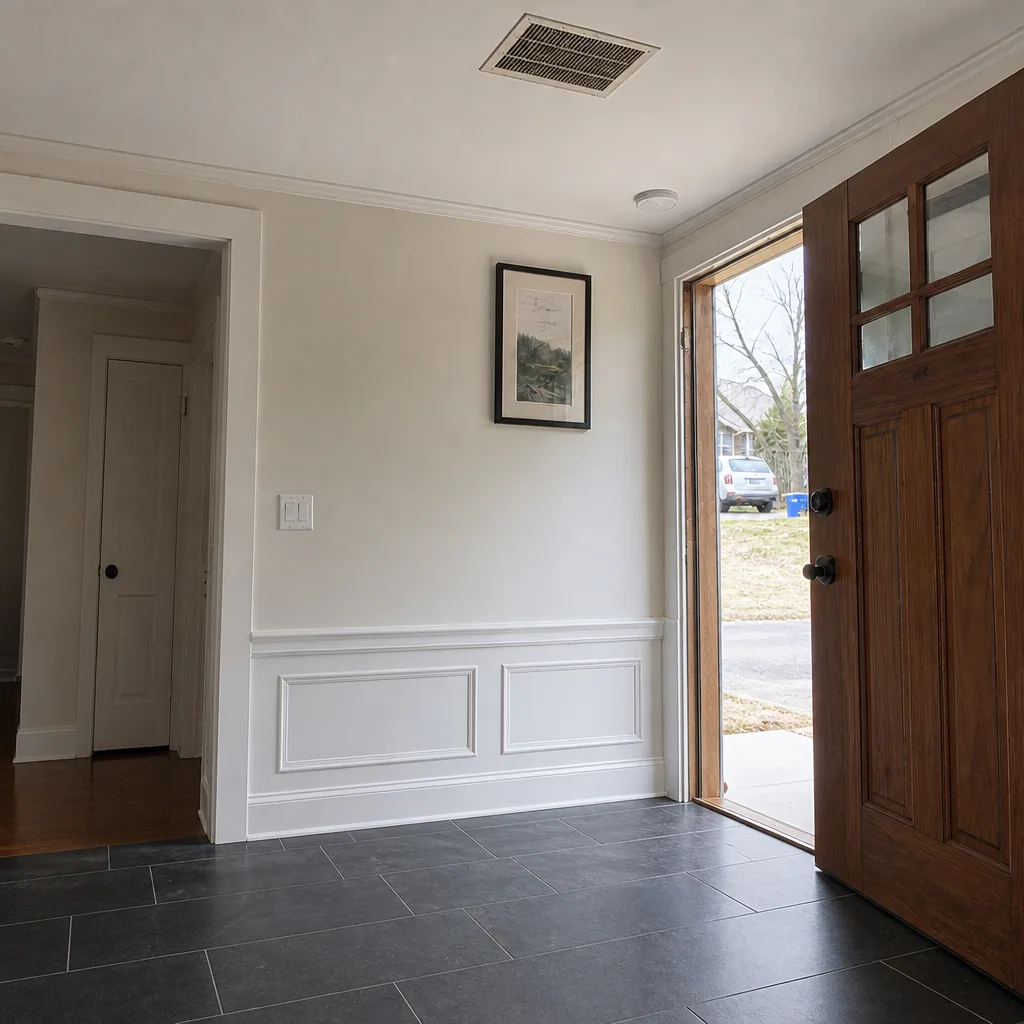 After
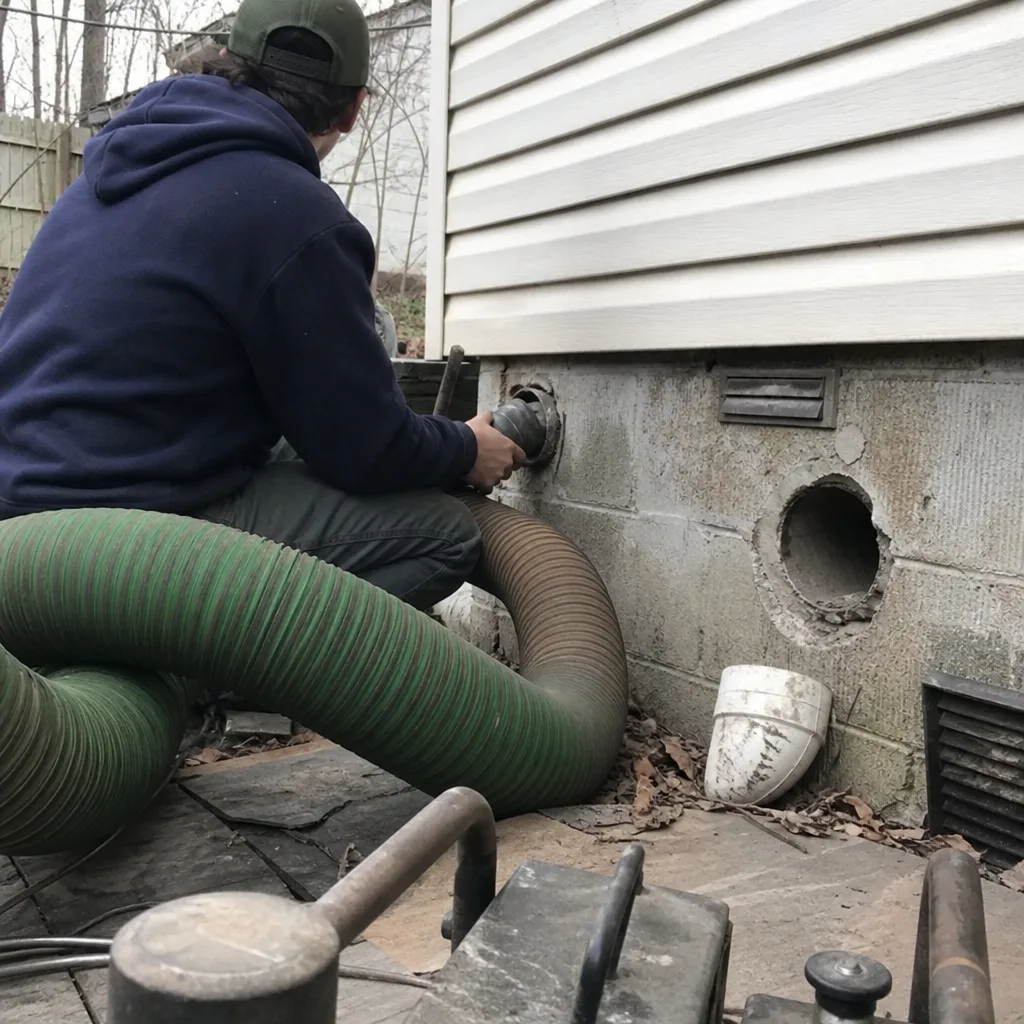 Before
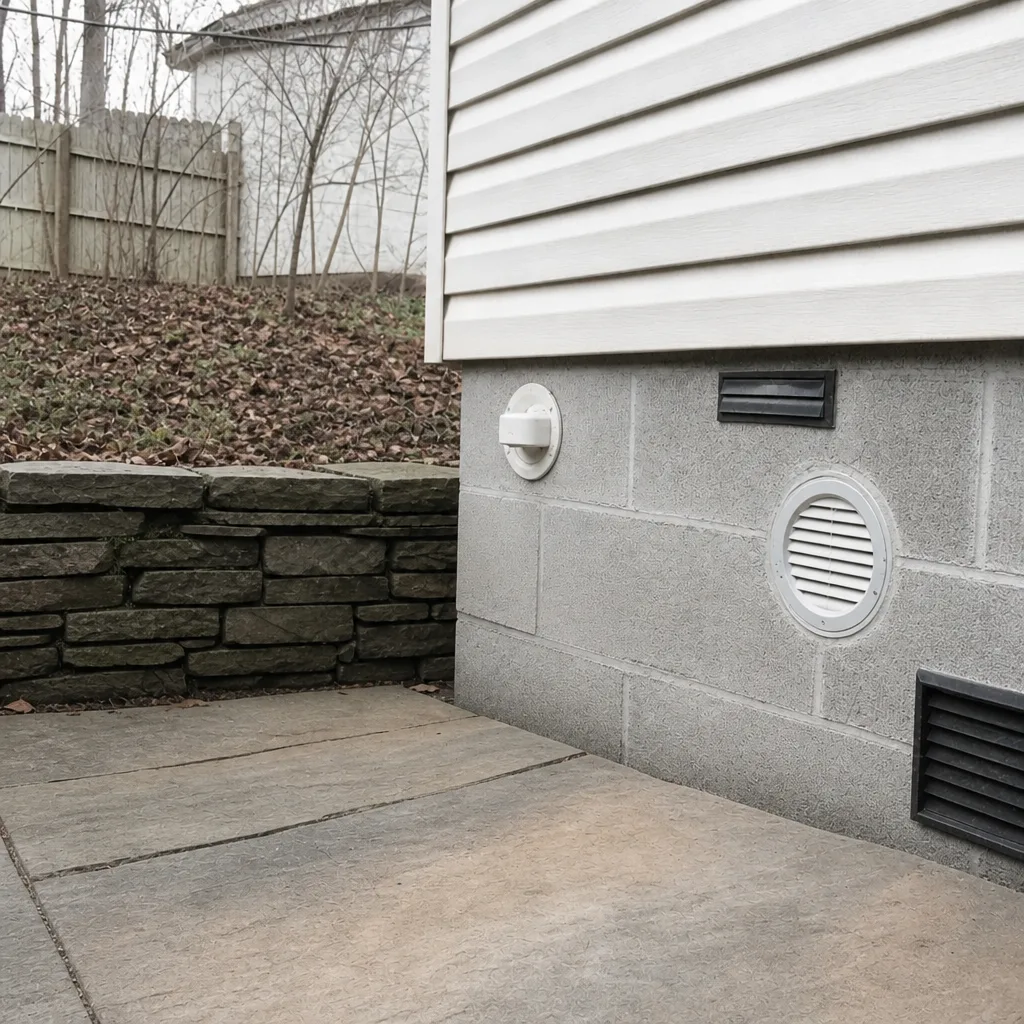 After
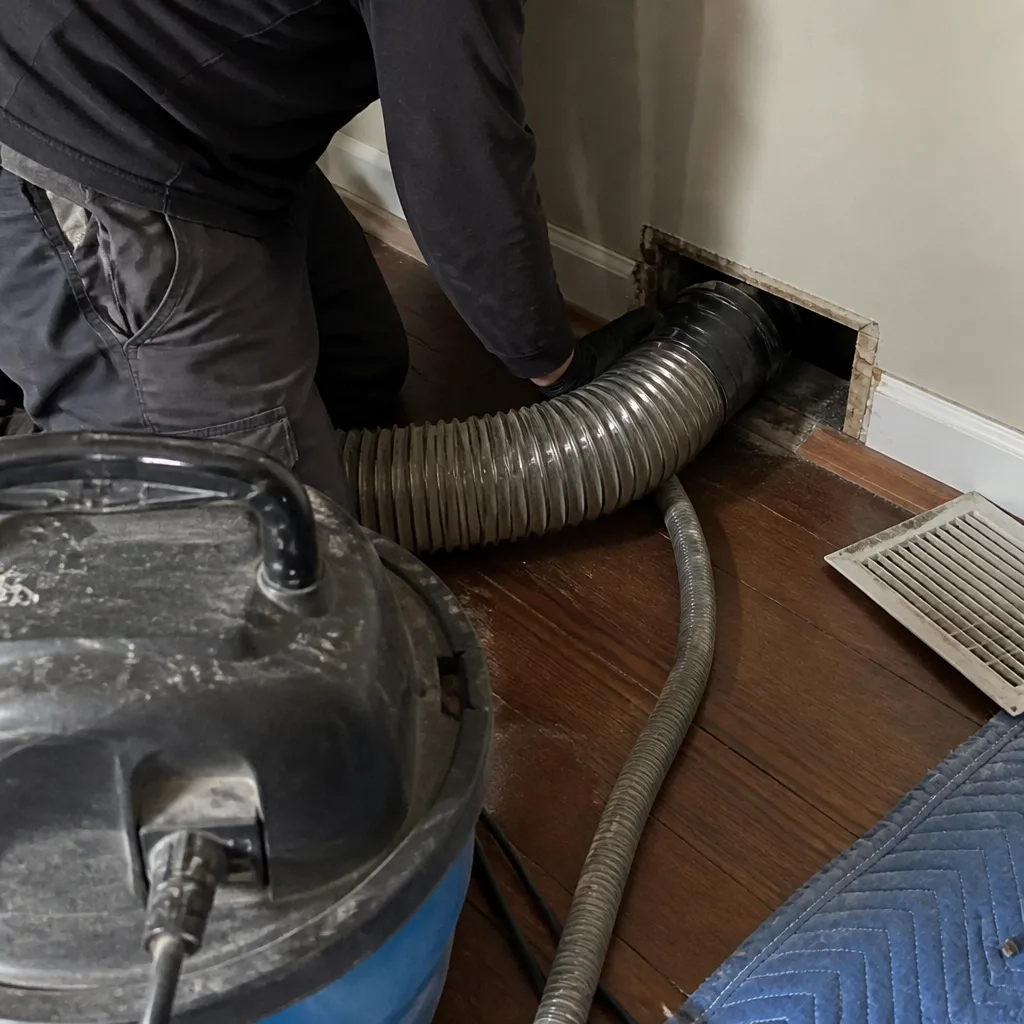 Before
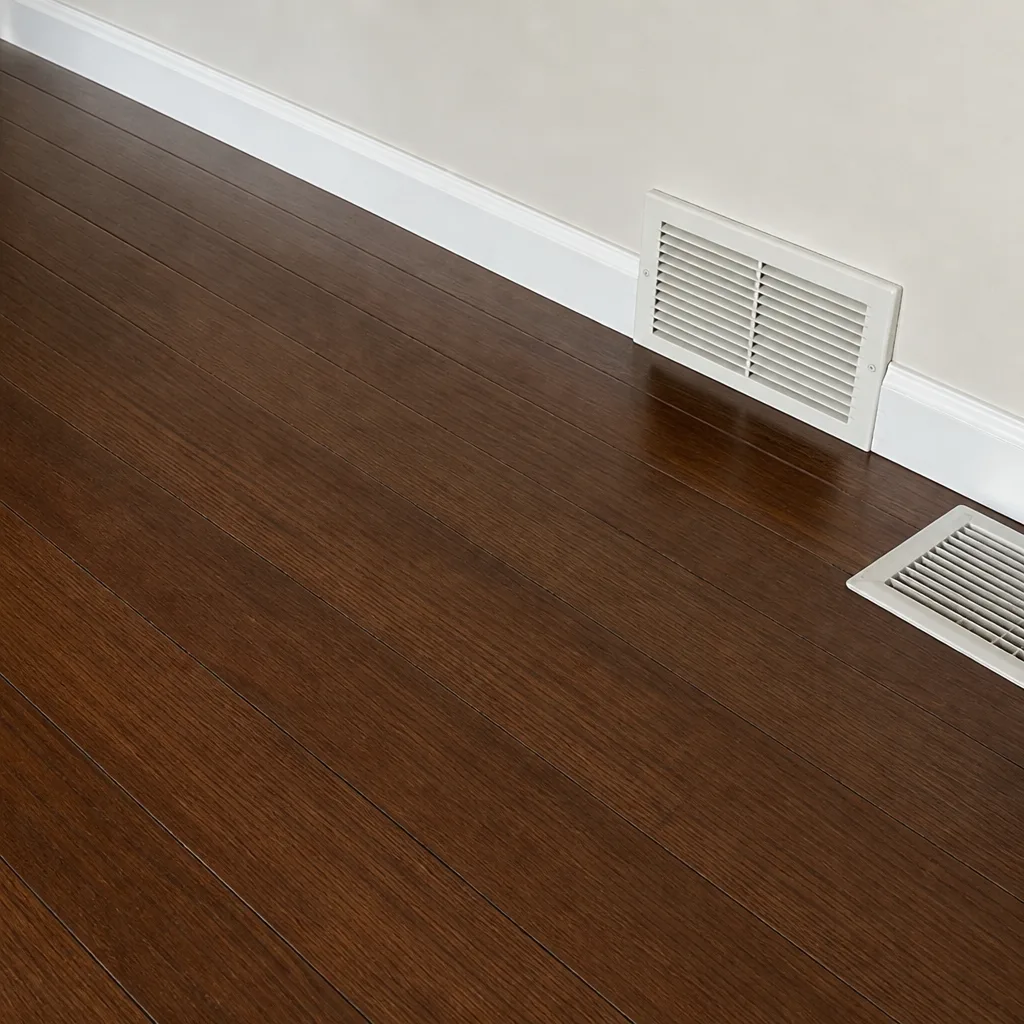 After
When to Call a Professional
Call a duct specialist if floodwater reached your crawlspace or attic duct, if your home has had a fire and the HVAC has run since, if you notice weak or dead registers after a freeze event, or if you smell a persistent musty or smoky odor coming from the vents. Call before you run the system, and call before any cleanup work begins if you’re filing an insurance claim. If you’re not sure whether your duct was affected, an inspection is the fastest way to find out – and it’s free. Jasper Duct Cleaning offers free estimates in Raleigh – call (844) 834-2817. We answer 24/7. Fast dispatch from 7am to 7pm, Sunday through Friday.
Frequently Asked Questions
Usually not if it was flex duct or fiberglass duct board that sat in water. Saturated insulation inside flex duct doesn’t dry reliably and can’t be cleaned back to a safe condition, so replacement of the affected runs is typically the answer. Sheet metal duct that got wet but wasn’t saturated can often be cleaned and dried. An inspection tells you which runs are which – call (844) 834-2817 for an exact quote.
Assume 48 hours is your window. Once flex duct insulation is saturated, mold growth can begin within a couple of days in Raleigh’s humidity, and the material starts breaking down. Turning the HVAC on during that window spreads the problem through the whole house. Get the inspection done fast – the estimate is free.
Yes, if the HVAC ran during or after the fire. Smoke moves through the return side and deposits soot and acidic residue throughout the supply runs and the air handler cabinet, and surface cleaning of registers doesn’t reach it. A proper job uses source-capture HEPA vacuuming and mechanical agitation to remove what’s bonded to the duct interior. Call (844) 834-2817 to schedule an inspection.
A disconnected or crushed attic duct run is the most likely cause. Freeze-thaw cycles stress duct joints and seals, and a failed connection dumps conditioned air into the attic instead of the room. The system still runs, which is why the problem is easy to miss. It’s a repair job, not a replacement – and we handle both.
It often does when the damage is tied to a covered event and documented properly before work starts. That’s why photography, airflow notes, and a written inspection report matter so much in the first 48 hours. We can work with your insurer and provide the before-and-after documentation the claim needs. Call (844) 834-2817 for an exact quote on the work itself.
A cleaning-only crew vacuums the ducts and leaves; a duct specialist diagnoses the system, cleans it with source-capture equipment, and then repairs the gaps, disconnections, and damage the cleaning turned up. After a flood, fire, or freeze event, repair capability is the difference between a fixed system and a recurring problem. Jasper Duct Cleaning does all three: cleaning, repair, and dryer vent work. Call for a free estimate.
The Bottom Line
Raleigh storm plans usually cover power, water, and food. They should also cover the duct system, because that’s where post-storm damage hides and compounds. If floodwater touched your duct, don’t run the HVAC – get it inspected. If smoke entered the return side, surface cleaning won’t fix it – get source-capture cleaning. If an ice storm left a room heating poorly, that’s a repair, not a mystery. Document everything before work begins, call the trades in the right order, and act inside 48 hours. Most of what becomes a replacement job started as something repairable. Jasper Duct Cleaning handles air duct cleaning, dryer vent cleaning, and duct repair as one provider, so you’re not coordinating three companies to get one system back in shape.
Call (844) 834-2817 for a free estimate. We answer 24/7. Fast dispatch from 7am to 7pm, Sunday through Friday.
Written by the team at Jasper Duct Cleaning.